
Last Updated: November 22, 2026
Quick Summary
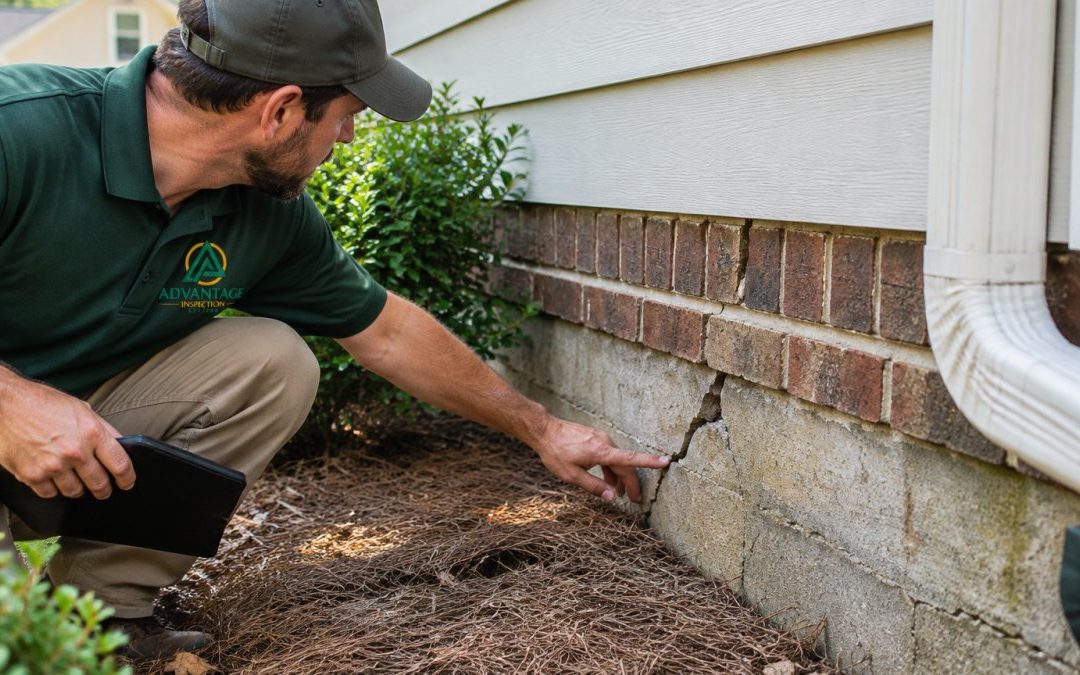
The most common foundation issues in Raleigh homes are settlement from expansive Piedmont clay soil, poor grading and drainage that sends water toward the house, crawl space moisture, and cracks that range from cosmetic to structural. Raleigh’s clay swells when wet and shrinks when dry, pushing and pulling on foundations season after season.
- Hairline cracks in drywall or paint are typically cosmetic, but cracks approaching the width of a dime in masonry warrant a professional look.
- Ground should slope away from the foundation at roughly six inches over the first ten feet.
- Clear gutters before heavy rain and again after leaves fall to keep water off the foundation.
- A standard home inspection describes visible conditions but is not a structural engineering report or repair estimate.
- A home foundation inspection covers visible foundation, grading, drainage and movement signs, but not digging or engineering analysis.
Table of Contents
- What are the most common foundation issues in Raleigh homes?
- Signs of foundation problems in a house
- How Raleigh soil, grading and rainfall drive settlement
- Crawl space moisture problems and water intrusion
- Foundation issues when buying a house
- What a home foundation inspection actually covers
- Schedule a home foundation inspection with Advantage
- Frequently Asked Questions
What are the most common foundation issues in Raleigh homes?
The most common foundation issues in Raleigh homes are settlement from expansive clay soil, poor grading and drainage that sends water toward the house, crawl space moisture, and cracks that range from cosmetic to structural. This guide covers what to look for, what it means, and when to call a professional.
Raleigh sits on Piedmont clay that swells when wet and shrinks when dry. That cycle pushes and pulls on foundations year after year. Many homes here also sit on crawl spaces, which makes moisture control a big part of the story.
Below, we walk through the warning signs, the local soil and weather factors, and what a home foundation inspection actually covers. We’ll also show you how to tell a hairline crack from something that needs a closer look.
Signs of foundation problems in a house
The clearest signs of foundation problems in a house are cracks in walls and masonry, doors and windows that stick, and floors that slope or feel uneven. One symptom alone rarely means trouble. Several together, or one that is clearly getting worse, usually deserves a closer look.
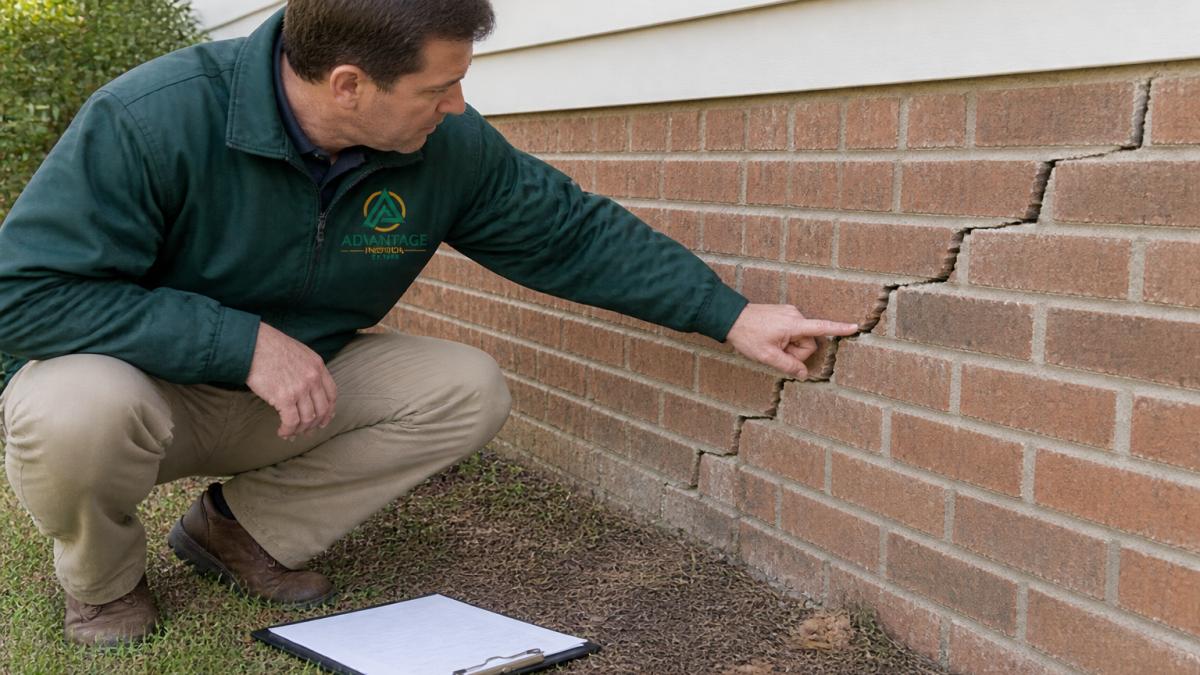
Cracks that matter and cracks that usually do not
Not every crack is a warning sign. Hairline cracks in drywall, paint, or exterior stucco are common as a house settles and ages. They are usually cosmetic.
Inspectors commonly evaluate a crack on four things: width, direction, whether the two sides are offset, and whether it is changing. A practical way to sort them:
- Width. Hairline cracks in drywall or paint are typically cosmetic. Cracks approaching the width of a dime in masonry or foundation walls, or any crack you can slip a coin into, warrant a professional look.
- Direction. Vertical cracks are often shrinkage or settlement. Diagonal cracks, especially stair-step patterns through brick or block mortar, more often track movement at a corner or along a wall. Horizontal cracks in a foundation wall, particularly below grade, are the pattern most worth prompt attention.
- Offset. Run a finger or a straightedge across the crack. If one side sits proud of the other, the wall has moved rather than just shrunk.
- Change over time. This is the single most useful test. A crack that is stable for years is a different story than one that has widened since you last looked.
Cracks worth a closer look:
- Stair-step cracks in brick or block, running diagonally through the mortar
- Cracks that are wider at one end than the other
- Cracks that let daylight or air through
- Cracks that keep growing after you patch them
- Horizontal cracks in a foundation wall
A simple homeowner monitoring checklist
You do not need tools to build a useful record. Photograph each crack with a ruler or coin held against it for scale, note the date, and repeat every few months and after major weather swings. Bring that photo log to an inspection, since a dated sequence gives an inspector more information than a single snapshot.
Watch out: patching or painting over a crack before it has been evaluated can hide the movement pattern an inspector needs to see, so document first and repair later.
Doors, windows and floors that tell the story
Doors and windows that stick or no longer line up are often an early clue. A door that drags on the frame, or a window that won’t close flush, can mean the structure has shifted.
Uneven or sloping floors are another signal. A slight slope in an old home is common. A floor that feels springy, bounces, or drops noticeably toward one side is worth checking. A marble or ball bearing rolled across the floor is a quick, low-tech way to confirm a slope you suspect.
Foundation problems rarely travel alone. The common hidden home inspection issues we find often show up alongside moisture and settling. Our guide to 7 signs of foundation issues to check during an inspection walks through each warning sign in more detail.
How Raleigh soil, grading and rainfall drive settlement
Expansive clay soil is the biggest local driver of foundation settlement. The Piedmont clay common across the Triangle holds water and swells, then dries and shrinks.
Grading and drainage make it worse. When the ground slopes toward the house instead of away, rainwater pools against the foundation. Saturated clay expands, and the soil under part of the foundation can lift while the rest stays put. A common guideline is that the ground should slope away from the foundation at roughly six inches over the first ten feet.
Heavy summer storms and seasonal dry spells keep that cycle going. Tree roots add to it by pulling moisture out of the soil near the foundation, which can cause the ground to shrink and settle unevenly, which is why a large tree close to the house is worth noting even when the tree itself is healthy.
A seasonal maintenance schedule that actually helps
Drainage is the lever a homeowner can control, and timing matters:
- Spring and summer (storm season). Clear gutters and downspout screens before heavy rain, confirm downspouts discharge well away from the foundation, and check that splash blocks or extensions are in place. Walk the perimeter during a hard rain and watch where water actually goes.
- Late summer and fall (dry spells). Watch for new cracks or doors that begin to stick as soil dries and shrinks. Note them in your photo log rather than patching immediately.
- Fall (leaf drop). Clear gutters again after leaves fall, a clogged gutter sends water down the wall and against the foundation.
- Winter (freeze risk). Disconnect hoses, check that downspouts aren’t blocked by ice, and make sure the grade hasn’t been disturbed by settling or landscaping.
- Year-round. Keep soil, mulch, and plant beds from banking up against siding or foundation walls, and avoid overwatering beds near the house.
The EPA’s guidance on managing stormwater around the home explains how water should move away from a structure. These steps reduce stress on the foundation; they are maintenance, not a repair, and persistent movement still calls for a professional evaluation.
Crawl space moisture problems and water intrusion
Crawl space moisture problems are common in Raleigh homes, and they often go unnoticed. Damp air under the house can lead to wood rot, musty odors, and mold growth on framing and insulation.
Watch for these signs:
- A musty smell inside the home
- Sagging or bouncy floors above the crawl space
- Visible dampness or standing water under the house
- Rust on ductwork or fasteners
Water intrusion usually starts with poor drainage or a vapor barrier that’s missing or torn. Fixing the source, grading, gutters, and ground cover, matters more than masking the symptom.
If you’re concerned about mold, our guide on when buyers should order mold testing explains what testing can and cannot tell you. Testing identifies conditions. It does not fix them, and follow-up work is handled by a qualified contractor.
Foundation issues when buying a house
Foundation issues when buying a house deserve early attention because they can affect both the deal and your budget. A standard home inspection describes visible conditions. It is not a structural engineering report or a repair estimate.
Here’s how to think about it during due diligence:
- Note the symptoms. Cracks, sticking doors, and uneven floors belong in your inspection report.
- Ask about age and history. Older homes settle more, and past repairs may not be documented.
- Understand the limits. An inspector reports what’s visible. Hidden conditions may need a specialist.
- Budget for follow-up. If issues turn up, a structural engineer can advise on repairs.
The hidden costs of buying older homes guide covers the expenses that foundation and related issues can add. For most buyers, the goal is information, not a verdict. Advantage Inspection has helped Triangle buyers understand property condition since 1988, and a detailed report is the starting point for good questions.
What a home foundation inspection actually covers
A home foundation inspection covers the visible condition of the foundation, grading, drainage, and the signs of movement inside and outside the home. It does not include digging, engineering analysis, or repair recommendations.
Here’s what a typical inspection looks at:
| Area | What’s checked | What it does not include |
|---|---|---|
| Foundation walls and slab | Cracks, movement, deterioration | Structural engineering analysis |
| Grading and drainage | Slope, pooling, downspout discharge | Drainage repairs |
| Crawl space | Moisture, vapor barrier, framing | Mold remediation |
| Interior | Doors, windows, floors, wall cracks | Repair estimates |
| Exterior | Masonry, siding, vegetation near the house | Tree removal or landscaping |
An inspection is a snapshot of visible conditions at the time. It is not a guarantee, a code inspection, or insurance. When findings suggest a deeper problem, a licensed structural engineer is the right next step. Advantage does not perform repairs, treatment, or remediation, so any follow-up work is done by a qualified contractor you choose.
Schedule a home foundation inspection with Advantage
If you’ve spotted cracks, sticking doors, or dampness under the house, the next step is a professional look. Advantage Inspection serves Raleigh, Durham, Cary, Chapel Hill, Apex, and surrounding communities. Our reports describe visible conditions so you can make an informed decision.
Related services that may fit foundation concerns include sewer scope inspections and environmental testing. When you’re ready, contact us to schedule a home foundation inspection and get clear answers about your property.
Foundation problems can feel overwhelming, but the right information makes them manageable. Advantage Inspection gives you a detailed report on visible conditions, backed by decades of local experience and a 4.9-star rating from verified reviews. Get started with Advantage Inspection and understand your property’s condition before you decide.
Frequently Asked Questions
Is it smart to buy a house with foundation issues?
It depends on what the issue is and how it is documented. A house with a cosmetic crack and well-managed drainage is a different purchase from one with ongoing settlement and water intrusion. Before you decide, get a home foundation inspection so you know the visible condition, and ask a licensed structural engineer for an opinion on anything the inspector flags. Treat the report as information for negotiation and due diligence, not as a repair quote or a guarantee about future performance.
How can you tell whether a foundation crack is serious?
Width alone does not settle it. Warning signs include stair-step cracks in masonry, cracks that are wider at one end, horizontal cracks in a foundation wall, and cracks paired with sticking doors or sloping floors. Hairline cracks in mortar or drywall are often cosmetic and related to normal curing or seasonal movement. A home foundation inspection can document the visible pattern and location, and an engineer can confirm whether movement is active.
Can poor drainage contribute to foundation problems?
Yes. Water that pools near the foundation or drains toward the house keeps soil wet, and in expansive clay that soil swells and later shrinks as it dries. Over time that cycle can move a foundation. Look for gutters that discharge next to the wall, soil that slopes back toward the house, and low spots that hold water after rain. Correcting grading and downspouts is usually the first step before any structural work is discussed.
When should you have a foundation concern evaluated by a professional?
Book an evaluation when you see movement that is new or getting worse, doors or windows that no longer close properly, cracks that keep reopening after patching, or moisture in the crawl space. If a home foundation inspection turns up conditions that suggest structural movement, the next step is a licensed structural engineer, who can assess the cause and recommend repairs. Advantage documents visible conditions and does not perform repairs or mitigation.


Recent Comments