
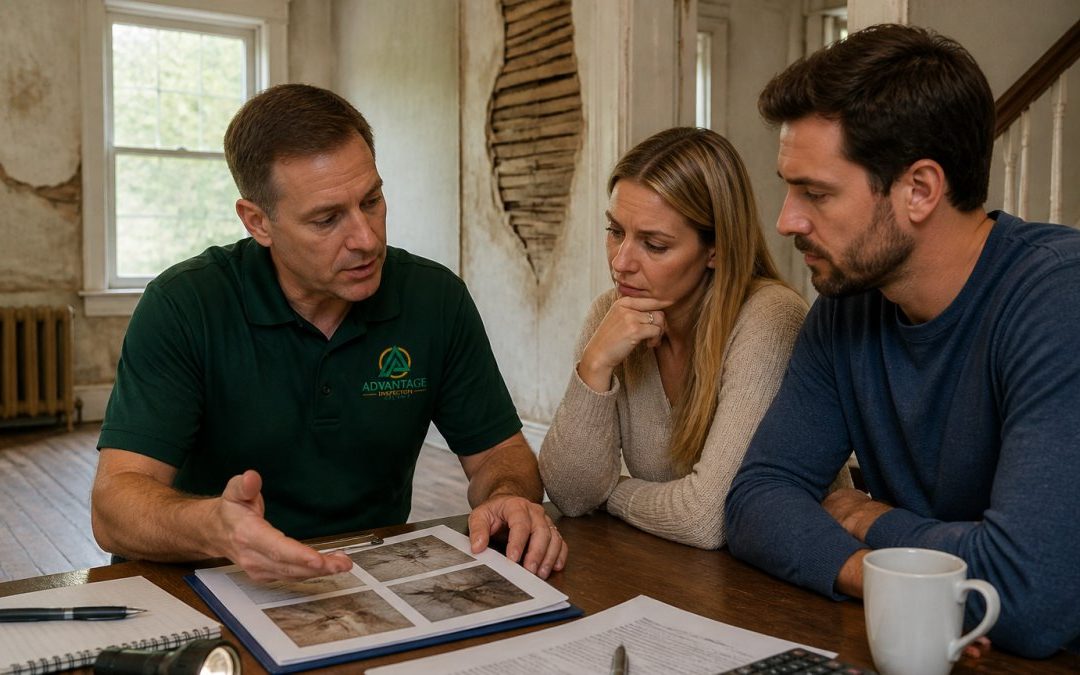
Table of Contents
- Hidden Costs of Buying Older Homes: What Buyers Miss
- Common Problems in Old Houses That Drive Up Costs
- Older Home Inspection Checklist: Systems to Prioritize
- Old House Maintenance Costs and Your First-Year Budget
- Environmental Hazards: Lead Paint, Asbestos, Radon, and Mold
- Home Inspection Negotiation: Turning Findings Into Use
- Financing, Insurance, and Hidden Transaction Costs
- Conclusion: Budgeting for the Real Cost of Ownership
- Frequently Asked Questions
Last Updated: October 7, 2026
Hidden Costs of Buying Older Homes: What Buyers Miss
The sticker price is the smallest number in the deal. The hidden costs of buying older homes rarely show up in listing photos, they surface later, in crawlspaces, fuse boxes, and utility bills that double in January.
An older home’s systems predate modern building standards, so ownership includes repairs, environmental testing, and higher carrying costs a new build does not carry. You are not buying a house; you are buying a maintenance schedule.
The purchase price is a starting bid, not a final number. Budget for the systems the home already has, not the ones you hope it has.
Common Problems in Old Houses That Drive Up Costs
The most expensive problems in older homes are the ones you cannot see from the curb.
Deferred maintenance is the biggest driver: a slow roof leak becomes rotted decking, a dripping pipe becomes a failed subfloor. Buyers inherit all of it.
- Outdated wiring: knob-and-tube or aluminum wiring often cannot support modern loads and may not be insurable without replacement
- Plumbing: galvanized steel and polybutylene pipes corrode or fail, and replacing them means opening walls
- Roof replacement: an aging roof is one of the largest single expenses a buyer can face
The trap is cosmetic updates. New cabinets and fresh paint can hide a failing sewer line. Paint is cheap. Systems are not.
Cosmetic updates are the most common misdirection in older homes. New fixtures over old plumbing or wiring mean the seller spent money on appearance, not function. Inspect what is behind the walls, not what is in front of them.
Older Home Inspection Checklist: Systems to Prioritize
A standard inspection covers the basics, but an older home needs a prioritized checklist targeting the systems most likely to fail and cost the most to replace. Age decides: a 1920s bungalow and a 1970s ranch fail differently, and the same report item can mean “monitor” in one and “budget now” in the other.
Ask your inspector for remaining useful life, not just condition. A system that passes but is at the end of its service life is a cost you are about to absorb.
Expected Service Life of Major Systems
Use these ranges as a planning horizon, not a guarantee. Climate, maintenance history, and installation quality shift the numbers; coastal humidity and freeze-thaw cycles shorten the upper end.
| System | Typical Service Life | What Age Means for You |
|---|---|---|
| Asphalt shingle roof | 20-30 years | Past 20 years, budget for replacement within a few years |
| Metal or slate roof | 40-70+ years | Long-lived but expensive to repair; inspect flashing and fasteners |
| Gas furnace | 15-20 years | Past 15 years, expect replacement and plan for it |
| Central air conditioner | 12-17 years | Past 12 years, efficiency losses compound monthly |
| Heat pump | 12-15 years | Similar to AC; refrigerant type matters for future service |
| Tank water heater | 8-12 years | Past 10 years, failure risk rises sharply |
| Tankless water heater | 18-20 years | Longer life but descaling maintenance is required |
| Galvanized steel plumbing | 40-60 years | Often already failing; replacement means opening walls |
| Copper plumbing | 50+ years | Durable, but pinhole leaks appear in aggressive water |
| Polybutylene plumbing | 10-25 years | Prone to sudden failure; many insurers flag it |
| Cast-iron drain lines | 50-75 years | Scale buildup and cracking; sewer scope is essential |
| Clay sewer tile | 50-75 years | Root intrusion and offset joints are common |
| Knob-and-tube wiring | 60+ years | Often uninsurable without replacement |
| Aluminum branch wiring | 40+ years | Connection failures; many insurers require remediation |
| Electrical panel (60-amp) | 40+ years | Usually inadequate for modern loads |
How to Inspect by Era
- Pre-1950: knob-and-tube or early armored cable, galvanized supply lines, clay or cast-iron drains, no original grounding, possible lead paint and asbestos. Prioritize electrical, plumbing, and environmental testing.
- 1950-1978: aluminum branch wiring in some builds, polybutylene in some, early asbestos products, undersized panels. Prioritize panel capacity, wiring type, and lead paint disclosure.
- 1979-1990s: generally safer on lead and asbestos, but original HVAC, roofs, and water heaters are now at or past end of life. Prioritize mechanical systems and roof.
The Inspection Sequence That Saves Money
- Structure and foundation: cracks, settling, and moisture intrusion
- Roof: remaining service life, flashing, and previous patchwork
- Electrical: panel capacity, wiring type, grounding, and GFCI protection
- Plumbing: pipe material, water pressure, and drain function
- HVAC: age, efficiency, and duct condition
- Sewer line: a sewer scope reveals cracks, roots, and bellies that no visual inspection can find
- Environmental: radon, mold, asbestos, and lead paint
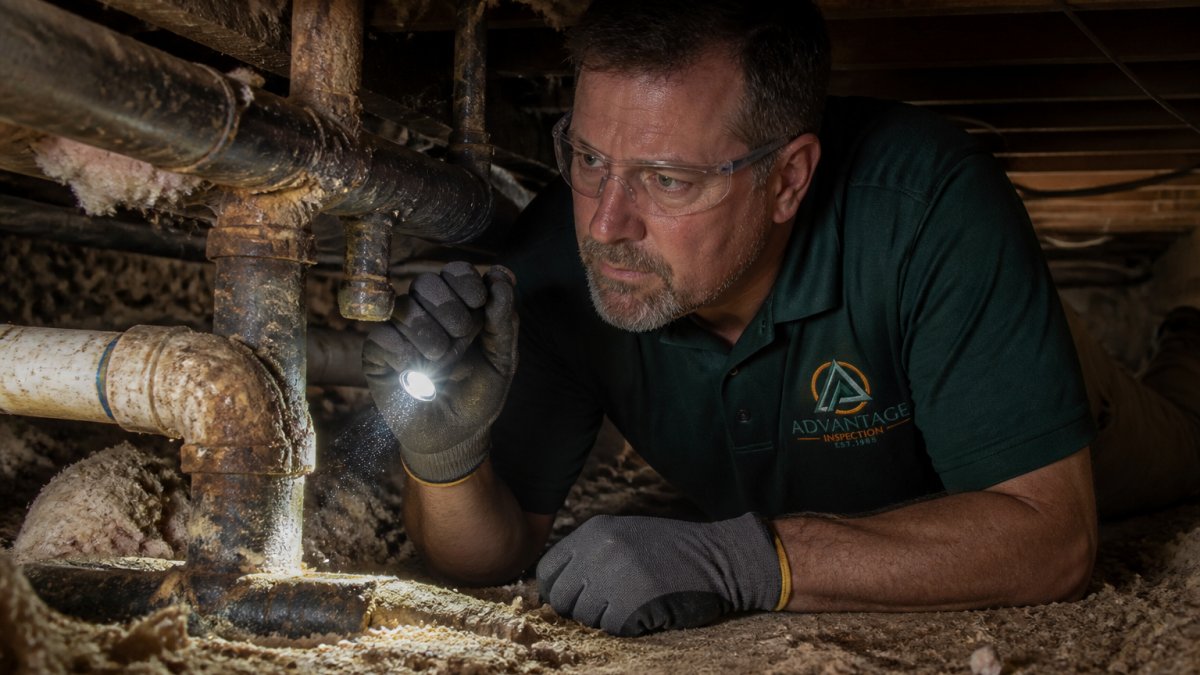
The sewer scope deserves emphasis. In older neighborhoods, clay and cast-iron sewer lines crack and fill with tree roots, and replacement is a major expense. A visual inspection never catches it, and neither does a standard home inspection unless you ask, which is why we offer it as a standalone service at Advantage NC.
Cost Ranges to Expect
These are typical national ranges for planning, not quotes. Your market, home size, and access difficulty will move them.
Ask the inspector for the age of every major system, not just its current condition. A working furnace that is 25 years old is a working furnace that is about to become your problem.
Condition tells you what works today. Age tells you what you will pay for tomorrow. Get both numbers before you negotiate.
Old House Maintenance Costs and Your First-Year Budget
Old house maintenance costs are predictable in aggregate even when individual repairs are not. The mistake is treating the first year like any other year: it is when deferred problems surface, and the year you have the least cash. Here is a first-year framework you can scale to your purchase price and inspection findings.
A Sample First-Year Budget
Assume a $400,000 older home with a clean but aging inspection. Figures are illustrative, not quotes.
| Category | Planning Amount | Why It Matters |
|---|---|---|
| Immediate repairs (safety/insurability) | $3,000-$10,000 | Lenders and insurers may require these before closing |
| Emergency reserve | $5,000-$15,000 | Older systems fail without warning |
| Utility premium over a newer home | $100-$300/month | Inefficiency compounds monthly |
| Routine maintenance | $1,500-$3,000/year | Seasonal upkeep, minor fixes |
| Capital reserve (sinking fund) | 1%-2% of purchase price per year | Roofs, HVAC, and sewer lines eventually need replacement |
| Specialty testing (radon, sewer scope, lead) | $300-$1,200 | Cheap relative to the problems they reveal |
How to Size the Reserve
A common rule of thumb is 1% of the purchase price per year for maintenance plus 1% more for capital reserves on an older home. If the inspection flagged a roof or HVAC at end of life, add the replacement cost to year one, not year five.
The Emergency Fund Is Not Optional
When a water heater fails in a new build, it is an inconvenience. In a 1940s house with original plumbing, it can mean a flooded basement. Most practitioners recommend holding three to six months of housing costs in reserve for an older home, and more if the inspection found deferred maintenance.
Energy Efficiency Is the Quiet Cost
Older homes leak air, lack modern insulation, and run inefficient HVAC equipment, so utility bills run higher month after month, a recurring cost that never shows up in the listing. Air sealing, added attic insulation, and a smart thermostat often pay back faster than buyers expect, but they are still upfront costs.
Deferred Maintenance vs. Cosmetic Updates
Prioritize safety and systems over finishes. A new kitchen over failing wiring is a liability, not an upgrade. Sort inspection items into three buckets:
- Safety and insurability: fix first, often required before closing
- Systems at end of life: budget now, replace on your schedule, not the failure’s schedule
- Cosmetic: defer until the first two are handled
Budget the first year separately from every year after it. The first year carries the catch-up costs; later years carry the maintenance costs.
Do not let a seller credit for cosmetic updates distract from a failing roof, sewer line, or electrical panel. Credits for finishes do not fix systems.
Environmental Hazards: Lead Paint, Asbestos, Radon, and Mold
Environmental hazards are the costs buyers most often overlook because they are invisible.
Lead paint was common in homes built before 1978, and disturbing it during renovation can create a health hazard, particularly for children (the EPA).
Asbestos appears in older insulation, floor tiles, and pipe wrap.
Radon is a colorless, odorless gas that can accumulate in any home, and testing is the only way to know whether it is present (the CDC). The EPA’s guide to radon explains testing and mitigation.
Mold signals moisture, and moisture signals a source you have not found yet. Treat mold as a symptom, not the problem.
None of these hazards is a reason to walk away from every older home.
Home Inspection Negotiation: Turning Findings Into Use
Home inspection negotiation works best when you treat the report as a factual record, not a bargaining chip. The goal is not a discount, it is getting the home into a condition you can insure, finance, and live in.
Here is how to approach it:
- Separate safety from preference. Health, safety, and insurability items are non-negotiable. Cosmetic preferences are not.
- Get repair estimates before you ask. A number is far more persuasive than a complaint.
- Ask for the fix, not just the credit. A seller credit is fine, but a documented repair by a licensed contractor is cleaner.
- Prioritize the big-ticket systems. Roof, foundation, electrical, plumbing, and sewer line come first.
- Know your walk-away number. Decide in advance what you will not absorb.
A thorough inspection does not hand the seller ammunition, it hands you information. Sellers who fear a detailed report usually know what it will find.
Waiving the inspection contingency to strengthen an offer means accepting every hidden defect as your own. In an older home, that is the single most expensive shortcut a buyer can take.
Financing, Insurance, and Hidden Transaction Costs
Financing and insurance costs rise sharply for older homes, and both can derail a deal after the inspection.
Watch for these transaction costs:
- Mortgage and financing fees: appraisal, origination, and rate-related costs
- Closing costs and legal fees: title, settlement, and recording
- Home inspection and survey costs: general inspection plus specialty testing
Insurance is where older homes get tricky. Insurers look at roof age, wiring type, and plumbing material, and some will decline coverage or require repairs before binding a policy.
Property taxes deserve a close look too. A reassessment after purchase can raise the taxable value, and that increase lands in your escrow payment, not the seller’s.
Conclusion: Budgeting for the Real Cost of Ownership
The real cost of ownership in an older home is the purchase price plus everything the previous owner deferred, plus the higher carrying costs of age. Buyers who plan do fine; buyers who do not get surprised, and surprises in old houses are expensive.
A professional inspection is the cheapest insurance you will ever buy on a property.
Schedule your inspection with Advantage NC and walk into closing with the full picture, not a guess.
Frequently Asked Questions
What are the downsides of buying an older home?
Older homes often carry deferred maintenance, outdated wiring, aging plumbing, and roof replacement needs that add to your cost of ownership. Property taxes may be reassessed after purchase, homeowners insurance premiums can be higher, and utility bills tend to run above newer construction. Environmental hazards like lead paint, asbestos, and radon are more common in pre-1978 homes. A thorough inspection and a first-year repair budget help you plan for these expenses before closing.
How much should I budget for repairs after buying an older home?
Budget for maintenance and repairs on an older home, with more set aside in the first year. Major systems have predictable lifespans. If the inspection flags two or more systems near end of life, plan for a larger emergency fund. Your older home inspection checklist should rank these by urgency.
How can I negotiate repairs after a home inspection?
Home inspection negotiation works best when you prioritize findings by cost and safety. Request fixes for structural issues, active leaks, and environmental hazards first, then ask for credits or price reductions on deferred maintenance. Sellers may counter with a repair allowance rather than doing the work themselves. Bring your inspection report to the conversation and focus on documented findings, not cosmetic preferences.
Can an older home fail a home inspection?
A home inspection does not pass or fail a house; it documents condition. However, findings like structural issues, outdated wiring, roof damage, or radon levels above the EPA action level of 4 pCi/L can affect financing and insurability. Lenders may require repairs before closing, and some insurers decline coverage on homes with certain conditions. Knowing common problems in old houses ahead of time helps you anticipate which findings could complicate your transaction.

Recent Comments