
Last Updated: October 28, 2026
Quick Summary
To spot roof damage as a buyer, check for missing, curled, cracked, or bald shingles, rusted or gaping flashing and caulking, and water stains, bubbling paint, or soft drywall inside. In the attic, look for moisture, mold, rot, and daylight through the roof boards, then have a qualified roofer verify anything suspicious.
- Curling shingle edges usually signal a roof near the end of its service life or heavy sun exposure.
- Damaged or corroded flashing is one of the most reliable predictors of a roof leak.
- Water stains inside rarely mark where a leak starts because water travels along framing first.
- Sort inspection findings into cosmetic, repairable, and replacement-level buckets before negotiating.
- Asphalt shingles commonly carry a manufacturer’s rating of 20 to 30 years.
Table of Contents
- Why Roof Damage Deserves a Closer Look Before You Buy
- 1. Shingle Problems: Missing, Loose, Cracked, and Curled Shingles
- 2. Flashing, Caulking, and the Details That Let Water In
- 3. Roof Leak Signs Inside the House
- A Roof Inspection Checklist for Home Buyers
- Questions to Ask About Roof Age and Repairs
- Roof Repair vs. Replacement Before Buying
- Schedule a Roof Inspection Before Your Due Diligence Deadline
- Frequently Asked Questions
Why Roof Damage Deserves a Closer Look Before You Buy
Spotting the signs of roof damage for buyers matters more than most house-hunting checklists suggest. A roof is one of the few systems on a home where a small, cheap fix today can turn into a five-figure problem after closing, and it is also one of the easiest things for a seller to patch, paint over, or simply not mention. At Advantage NC, we have inspected homes across the Triangle since 1988.
Here is the uncomfortable truth most guides skip: a fresh coat of sealant and a replaced ridge cap can hide years of slow water intrusion. That is why a visual walk-around is a starting point, not a verdict. Below, we break down the signs worth knowing, how to read them, and how to turn what you find into a smarter purchase decision.
1. Shingle Problems: Missing, Loose, Cracked, and Curled Shingles
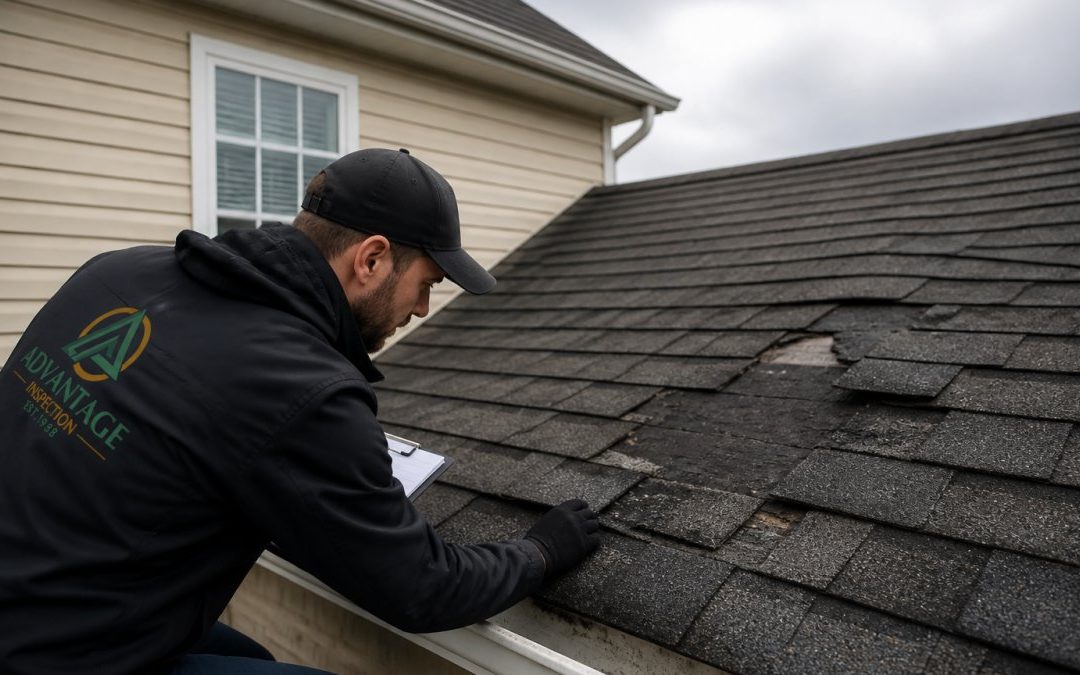
Shingle condition is the fastest read on a roof’s health. Look for shingles that are missing, sitting loose, cracked, or curling at the edges, because each one tells a different story about age and exposure.
Curling and lifting edges usually signal a roof near the end of its service life or one that has baked under heavy sun. Cracked shingles often point to storm impact or brittle, aged material.
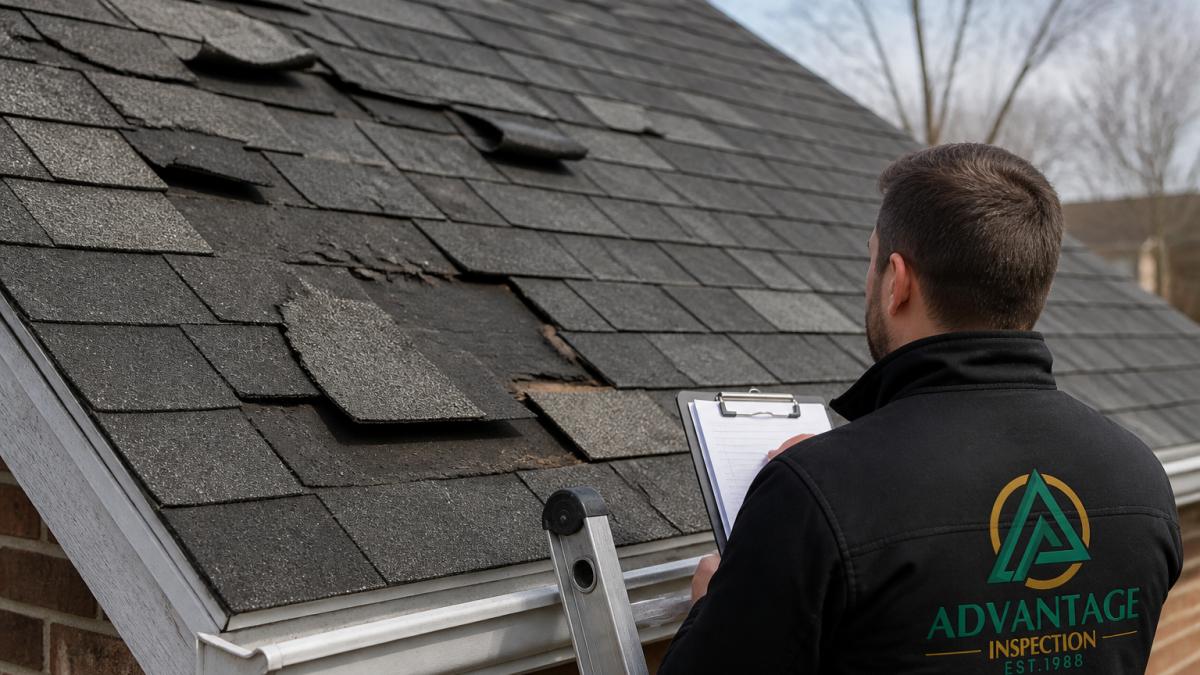
A common mistake is judging shingles from the ground. If you suspect storm or hail impact specifically, our guide on how to identify hail damage on your roof walks through the tell-tale dents and bruising to look for before you negotiate.
Granule Loss and Bald Spots
Granules protect the asphalt from sun and weather. When they wash away, shingles turn bald and gritty, and you will often find loose granules collecting in gutters or at the base of downspouts. Bald spots mean the shingle is aging fast and losing its defense against moisture.
2. Flashing, Caulking, and the Details That Let Water In
Flashing is the metal or membrane that seals the joints where the roof meets chimneys, walls, vents, and valleys. Damaged or corroded flashing is one of the most reliable predictors of a leak, because water pools at exactly these seams.
Check for rust, loose sections, and gaps where flashing meets the roof surface. Then look at the caulking around vents and penetrations. Cracked or missing caulking looks minor, but it is a direct path for water intrusion. Rusted gutters and loose fasteners belong in the same inspection: they signal chronic moisture that has been ignored.
3. Roof Leak Signs Inside the House
Water stains on ceilings and walls are the clearest indoor evidence of a roof leak, but they are rarely where the leak starts. Water travels along framing before it shows, so a stain in one room can trace back to damage several feet away.
Look for discoloration, bubbling paint, and soft drywall. If you see cracks around large openings, such as windows or doorways, it is fair to ask whether the cause is cosmetic or structural, and our breakdown of whether cracks around large openings are a structural concern explains what to flag for a closer look.
Attic Moisture, Mold, Rot, and Sunlight Through the Roof
The attic is where roof problems confess. Bring a flashlight and check for moisture, mold, and rot on rafters and decking. Daylight showing through the roof boards means a gap exists, and that gap lets water in too. Musty smells and dark staining point to long-term leaks that may have softened the structure.
A Roof Inspection Checklist for Home Buyers
Use this checklist during your walk-through, then hand the findings to a professional for verification. A buyer-focused roof inspection checklist keeps you from missing the obvious and gives your inspector specific areas to confirm. Structural integrity often hinges on more than just shingles, so incorporating a comprehensive home inspection guide ensures that hidden wood-boring pests do not compromise the property you intend to purchase.
| What to Check | Warning Sign | Why It Matters |
|---|---|---|
| Shingles | Missing, curled, cracked, bald spots | Signals age and storm damage |
| Flashing and caulking | Rust, gaps, cracked sealant | Direct path for water intrusion |
| Gutters | Rust, granules, sagging | Chronic moisture and granule loss |
| Ceiling and walls | Stains, bubbling, soft spots | Active or past leaks |
| Attic | Moisture, mold, rot, daylight | Hidden structural damage |
| Roof surface | Sagging, moss, debris, patches | Deferred maintenance and mismatched repairs |
What You Can Safely Check From the Ground
Most of what a buyer needs to see is visible without climbing. Walk the perimeter with binoculars and note missing or lifted shingles, dark streaks, sagging ridgelines, rusted or loose gutters, and granules collecting at downspouts. Inside, check ceilings and walls for stains, bubbling paint, and soft drywall, and look in the attic for daylight through the decking, dark staining on rafters, and musty odors. Photograph anything suspicious with a phone and note the location so your inspector can confirm it.
What Requires a Qualified Roofer
A visual pass cannot tell you whether the underlayment is intact, whether flashing has failed beneath the surface, or how much service life remains. Those answers require someone on the roof with the right equipment and the willingness to walk it. Treat your own observations as a screening tool that directs the professional, not as a substitute for one.
How to Turn Findings Into a Purchase Decision
Once you have a written inspection report, sort findings into three buckets: cosmetic, repairable, and replacement-level. Cosmetic items, moss, debris, faded sealant, rarely justify a request. Repairable items, such as a localized flashing fix or a handful of shingles, can be handled through a repair request or a credit. Replacement-level findings, widespread curling, bald spots, repeated leaks, or a roof near the end of its service life, belong in your negotiation and may justify a contingency or a decision to walk away.
This is a screening tool, not a substitute for a roofer. Our home buying due diligence checklist shows where the roof inspection fits into the full timeline so nothing slips before your deadline.
Questions to Ask About Roof Age and Repairs
Roof age and repair history decide how much life is left, so ask directly and ask for paperwork. A seller who cannot document the roof’s age or past repairs is telling you something in itself.
- How old is the roof, and do you have the installer’s records?
- Has it been repaired, patched, or partially replaced, and where?
- Have you filed any insurance claims for storm or hail damage?
- Are there active leaks or areas you have had to watch?
- What is the remaining roof life according to your roofer?
What a Good Answer Looks Like
A documented roof has a paper trail: the original installer’s invoice, the shingle manufacturer and product line, the installation date, and any warranty paperwork. Ask for the permit record as well, most jurisdictions require a permit for a full replacement, and a missing permit can signal unpermitted work. If the seller says the roof was replaced but cannot name the contractor or produce a receipt, treat the claim as unverified until your inspector confirms the condition.
Estimating Remaining Roof Life
Remaining life is a judgment call, not a number, but you can narrow it. Asphalt shingles commonly carry a manufacturer’s rating of 20 to 30 years, and actual service life depends on ventilation, sun exposure, and maintenance. A roof that is 15 years old with curling edges and bald spots is closer to the end than its age alone suggests; a roof of the same age with intact shingles and clean flashing may have years left. Ask the seller’s roofer for the basis of any remaining-life estimate, and have your own inspector weigh in before you rely on it.
Documentation and Insurance Considerations
Ask for repair records, warranties, and any storm-claim history, and keep copies with your inspection report. Insurability is a separate question: many insurers will inspect an older roof before binding a policy, and a roof with visible damage or a history of claims can affect coverage or premiums. If the roof is near the end of its service life, ask your insurance agent how that may affect a new policy before your contingency deadline. Mismatched shingles or fresh patches often reveal partial repairs that hide a larger problem, ask what prompted them, and get the answer in writing.
Roof Repair vs. Replacement Before Buying
Repair versus replacement comes down to remaining roof life and how widespread the damage is. A localized flashing fix or a handful of shingles is usually a repair. Curling across the whole surface, bald spots, or repeated leaks point toward replacement, and that changes the math on your offer.
Buyers often underestimate how roof issues stack onto other costs of an older home. Our guide to the hidden costs of buying older homes shows how a roof finding fits into the bigger budget picture before you commit.
Schedule a Roof Inspection Before Your Due Diligence Deadline
A visual walk-through tells you where to look. A professional roof inspection can provide information about roof condition. We have completed over 500,000 inspections and carry a verified 4.9-star rating from more than 1,900 reviews, with detailed reports built for the due diligence process and a 30-day protection program.
Our services include radon testing and sewer scopes. As one client, Marla Seagroves, put it: “I found the report very detailed and necessary during the due diligence process.”
Do not let a deadline push you into skipping the roof. Contact us to schedule your roof inspection before your due diligence deadline.
Frequently Asked Questions
What roof problems should buyers look for during a home tour?
From the ground, look for curled or missing shingles, dark patches that suggest granule loss, rusted gutters, and granules collecting at downspouts. Inside, check ceilings and walls for water stains and attics for moisture or daylight. A home tour is a first pass only.
Should buyers get a separate roof inspection before closing?
A standard home inspection includes a visual look at the roof, but it has limits on walking the surface and predicting remaining roof life. A dedicated roof inspection adds a closer evaluation of shingles, flashing, and caulking. It is worth scheduling when the roof is older, has visible damage, or shows mismatched repairs. Ask for the findings in writing so you can use them in negotiations.
How can you tell if a roof leak has caused interior damage?
Roof leak signs inside the house include brown ceiling stains, bubbling paint, and dark streaks on walls near the roofline. In the attic, look for damp sheathing, mold, rot, and rusted nails. Sunlight through the roof deck is another warning. These signs point to water intrusion that may have spread beyond the visible spot, so have a roofer confirm the source before you decide how to proceed.
What should buyers ask about a roof’s age and repair history?
Ask for the roof’s installation date, the roofing materials used, and any repair history with receipts or warranties. Find out whether repairs were done by a licensed roofer and whether insurance claims followed storm or hail damage. Ask what remaining roof life the seller expects and whether they have documentation. Vague answers are a reason to budget for roof replacement before you finalize your offer.
The riskiest move in a competitive market is waiving the roof inspection to strengthen your offer. Get the roof looked at properly, understand what you are buying, and negotiate from facts instead of hope. Get started with Advantage NC and schedule a roof inspection that gives you a clear, documented picture before you sign.


Recent Comments