
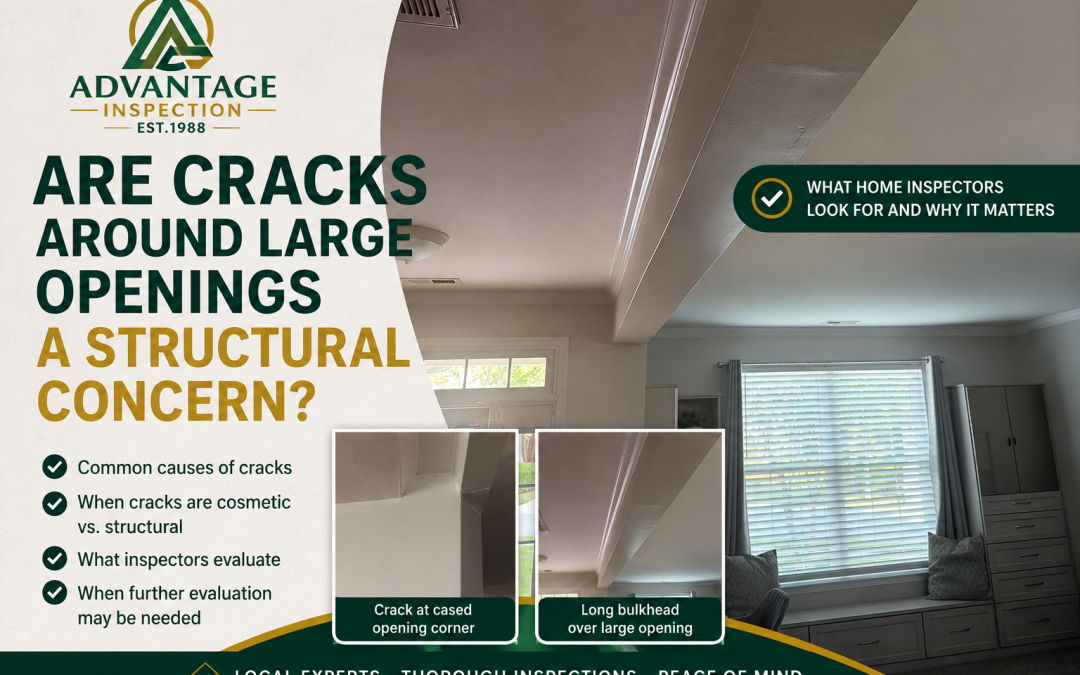
Are Cracks Around Large Openings a Structural Concern?
We recently received a question from a Realtor about cracking and drywall imperfections around a large cased opening in a Cary home.
Hi Dave and Pete!
My client has some concerns with the opening into the living room/den area. It’s about an 18′ opening. There are a few imperfections in the opening and a crack where the cased opening meets the wall. I’ve attached 2 pictures for reference. There is access to the attic area via pull-down stairs, where we might be able to look at the framing above this area, but I’m not sure. Wondering if there might be an inspector with a framing background who could speak about this. I don’t really see a major concern, but my client has mentioned it a couple of times.
Thanks!
SH
This is actually a very common concern we hear during home inspections, especially in homes with large open floor plans, wide cased openings, and longer drywall spans.
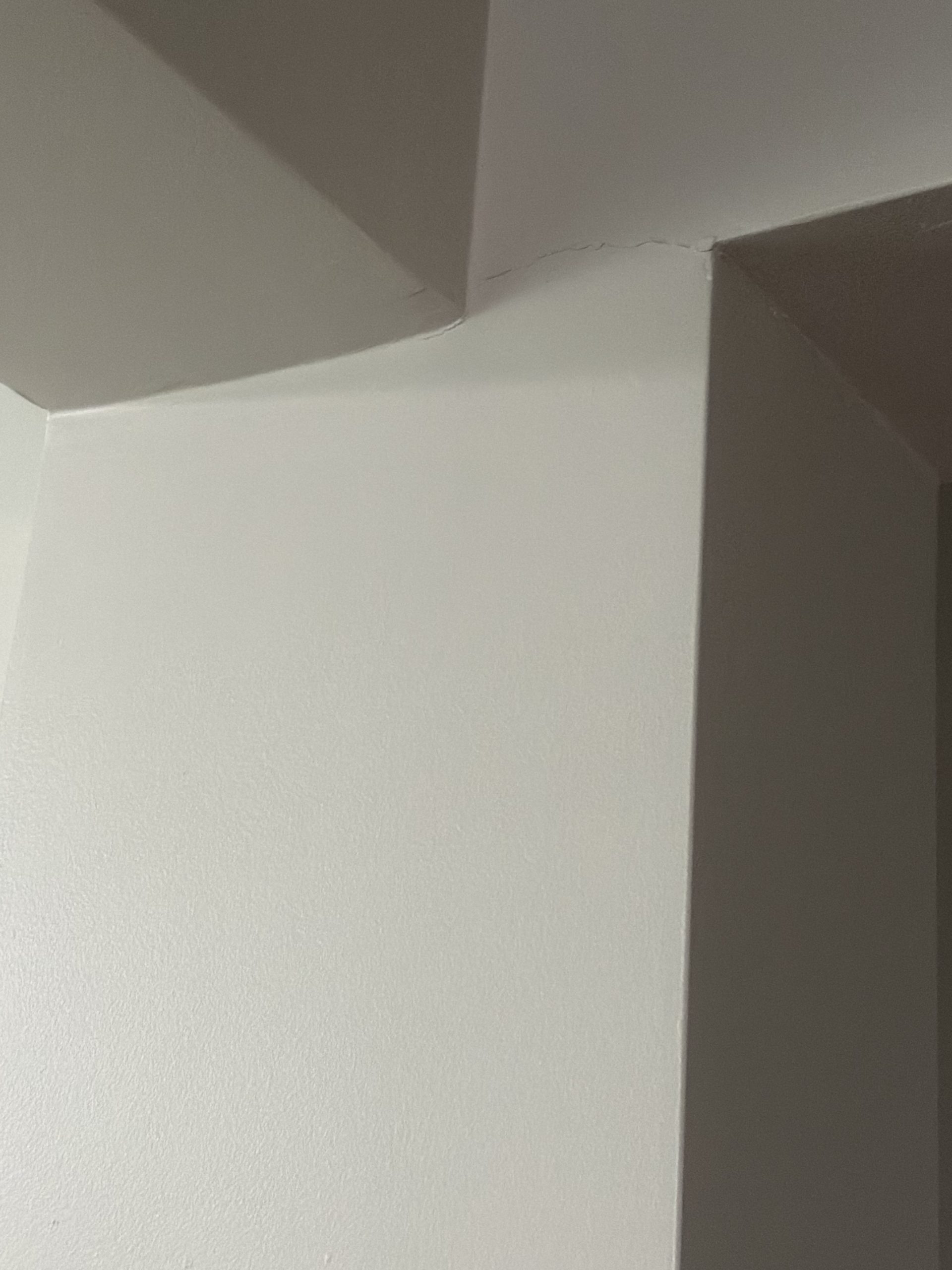
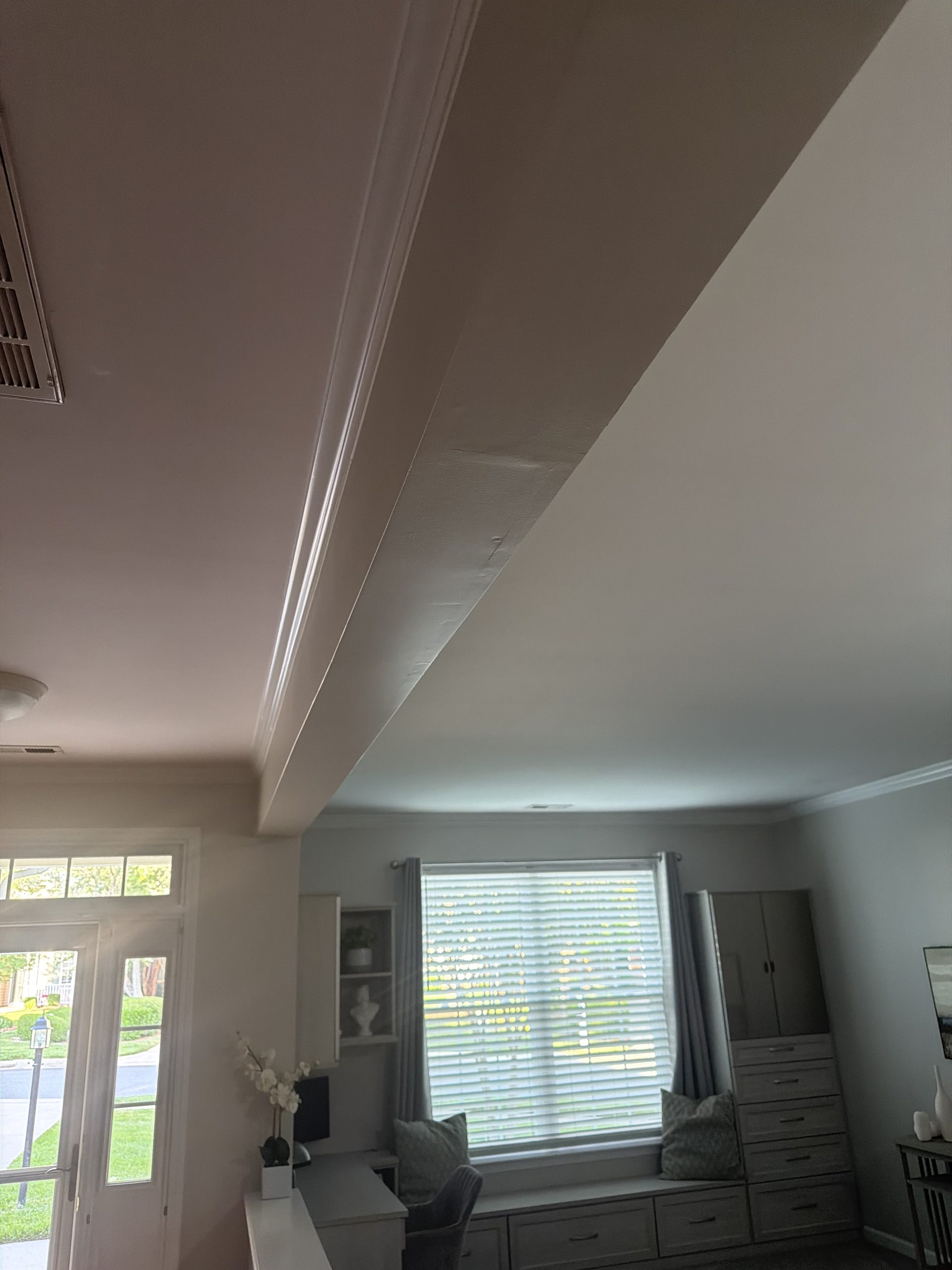
Our Thoughts on Cracks Around Large Openings
Based on the photos and our experience inspecting homes throughout the Triangle area, nothing immediately jumps out as a major structural concern.
What we commonly see in situations like this is minor settlement or framing movement where several stress points come together.
In this particular area, you have:
- A large cased opening
- Drywall seams
- A nearby door header
- A long bulkhead/beam transition
- Different framing members tying together
Even very small amounts of normal movement can create hairline drywall cracking at corners and transition points.
Why These Cracks Happen
Homes naturally expand and contract over time.
In North Carolina, seasonal humidity changes can cause:
- Lumber movement
- Drywall seam stress
- Minor settling
- Cosmetic cracking
Longer spans and larger openings tend to show these imperfections more than smaller rooms because there is simply more movement across the framing system.
The long bulkhead shown in the photos also appears fairly typical from what we can see. Slight waviness, drywall seam movement, or small imperfections are not uncommon in these areas, especially in homes that are 20+ years old.
When Cracks Become More Concerning
While minor drywall cracking is common, there are certain conditions that can indicate a more significant structural issue.
Things we look for during an inspection include:
- Significant sagging
- Uneven floors
- Doors out of alignment
- Large or widening cracks
- Framing alterations
- Improper bearing points
- Deflection in beams or headers
- Evidence of ongoing movement
If multiple warning signs are present together, additional evaluation by a structural engineer may be recommended.
Can an Inspector Evaluate This?
Absolutely.
While a home inspector cannot provide engineering certification, an experienced inspector can often determine whether conditions appear:
- Cosmetic
- Typical for age and construction
- Worth monitoring
- Or potentially structural in nature
In many homes, attic access can also help provide additional clues by allowing us to observe framing above the affected area, depending on accessibility and insulation conditions.
Final Thoughts
Hairline cracking around large openings is one of the most common concerns buyers notice during walkthroughs and inspections. Most of the time, these conditions are related to normal settlement, seasonal movement, or drywall seam stress rather than major structural failure.
That said, every home is different, and having an experienced inspector evaluate the area can help buyers better understand whether they are seeing a cosmetic issue or something that deserves additional review.

Recent Comments