

Last Updated: November 4, 2026
Quick Summary
Yes, radon tests are worth it during due diligence. Radon is a colorless, odorless radioactive gas, and testing is the only way to know whether a specific house has a problem. You spend a small amount to check a health risk you cannot see, smell, or taste.
- No federal law requires a radon test when buying a home; requirements come from state rules, lenders, and your contract.
- Short-term tests run two to seven days and need closed-house conditions, typically 12 hours before and throughout the test.
- The EPA action level is 4 pCi/L; retest to confirm, then treat mitigation as a condition of the deal or a seller credit.
- Who pays for mitigation depends on your contract, market, and negotiation; common structures include seller-paid work, credits, and escrow holdbacks.
- Schedule radon testing early so results land before your due diligence contingency expires.
Table of Contents
- Are Radon Tests Worth It During Due Diligence?
- What Radon Is and Why Only a Test Can Find It
- Radon Testing When Buying a Home: The Pros and Cons
- Is a Radon Test Required When Buying a Home?
- Short-Term vs. Long-Term Radon Testing Duration
- Reading Your Results: Action Levels, Retests, and Mitigation
- Who Pays for Radon Mitigation: Buyer or Seller?
- Schedule Your Radon Test Before Your Due Diligence Deadline
- Frequently Asked Questions
Are Radon Tests Worth It During Due Diligence?
Yes, radon tests are worth it during due diligence. Radon is a radioactive gas that can build up in any home, and testing is the only way to know whether a specific house has a problem.
You are spending a small amount to check a health risk you cannot see, smell, or taste.
Below, we break down what radon is, how testing works, who pays for fixes, and how to fit a test into a tight due diligence window.
What Radon Is and Why Only a Test Can Find It
Radon is a colorless, odorless radioactive gas that forms when uranium in soil breaks down. (the EPA) It rises through the ground and enters homes through cracks in the foundation, gaps around pipes, sump pumps, and crawl spaces.
You cannot detect radon with your senses. A basement can feel dry and smell clean while holding elevated radon levels. That is why testing is the only reliable method.
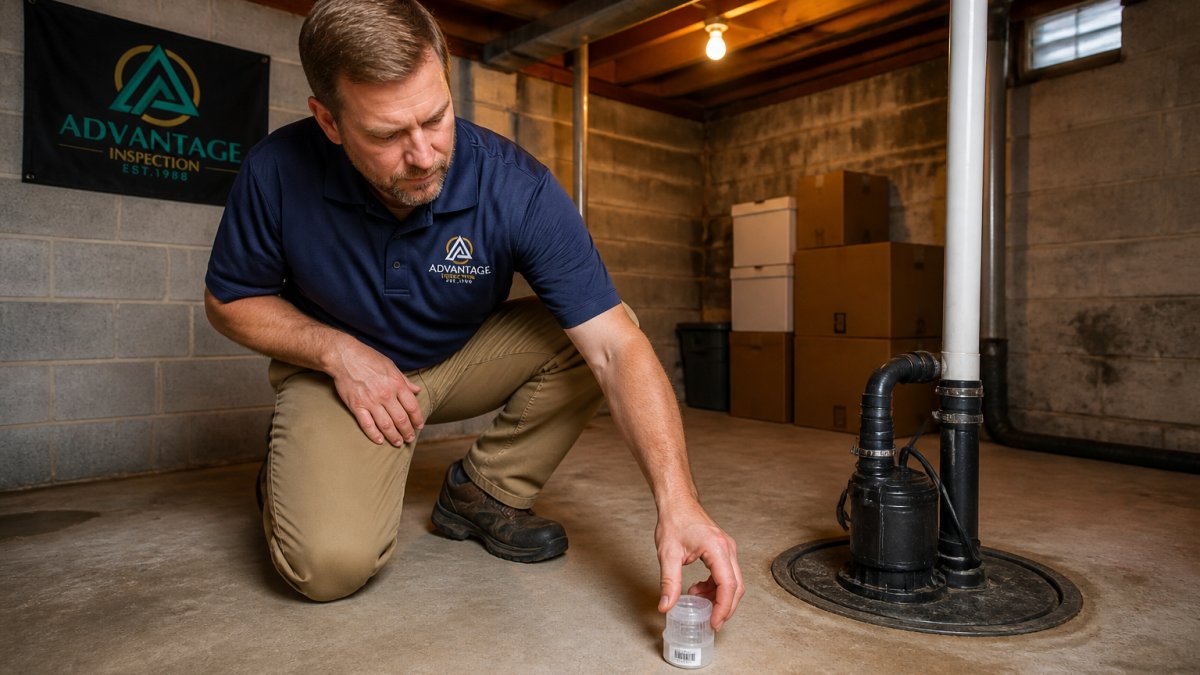
Radon levels also shift over time, so one test is a snapshot, not a permanent verdict.
Radon Testing When Buying a Home: The Pros and Cons
Testing gives you facts before you sign. Here is the honest trade-off.
Pros:
- Low cost compared with the repairs a radon problem can trigger
- Results support negotiation, credits, or a walk-away decision
- Protects your family’s long-term health
- Satisfies lender or contract requirements in some transactions
Cons:
- Short-term tests can miss seasonal variation
- Results take time, which can pressure a tight deadline
- A high reading may complicate a deal you want to keep
The pros outweigh the cons for most buyers. For ROI context on inspections generally, see why home inspections are worth it. A test is a small line item next to the price of a home.
Is a Radon Test Required When Buying a Home?
No federal law requires a radon test when you buy a home. Requirements come from state rules, lender conditions, and your purchase contract. Some contracts include a radon contingency; others do not.
Testing is generally recommended rather than compulsory in most markets.
Watch out: skipping the test because it is “optional” is the most common mistake we see. Optional does not mean unnecessary. If you are also weighing other add-on inspections, our guide on whether your buyer should get a sewer scope shows how buyers sort recommended from required checks.
Short-Term vs. Long-Term Radon Testing Duration
Short-term tests run two to seven days. Long-term tests run three months or more. Long-term tests capture data across seasons, which is why they are generally considered more representative.
During due diligence, you usually have days, not months. A short-term test with closed-house conditions is the practical choice. Closed-house conditions mean keeping windows and doors shut, typically 12 hours before and throughout the test, so readings reflect normal living conditions.
If the short-term result is elevated, a follow-up test confirms it before anyone commits to mitigation.
Reading Your Results: Action Levels, Retests, and Mitigation
Results are measured in picocuries per liter, or pCi/L. The EPA action level is 4 pCi/L (the EPA).
| Result | What It Means | Next Step |
|---|---|---|
| Below 2 pCi/L | Low level | Retest every few years, or sooner if you renovate the basement or change the HVAC system |
| 2 to 4 pCi/L | Moderate | Consider a follow-up test; many buyers use this reading as leverage for a credit rather than a demand |
| 4 pCi/L or higher | At or above action level | Retest to confirm, then mitigate before or shortly after closing |
The decision framework. Tie each result to what you do next:
- Below 2 pCi/L: proceed. The test cost is sunk, but you now have a baseline and a documented answer for the seller and any future buyer.
- 2 to 4 pCi/L: this is the gray zone where most deals get negotiated. A short-term reading in this band is not a reliable verdict on its own; ask for a confirmatory test, and if the second reading holds, negotiate a credit rather than demanding mitigation.
- 4 pCi/L or higher: retest to confirm, then treat mitigation as a condition of the deal or a seller credit. Do not let the contingency expire before the confirmatory result lands.
Cost-benefit. Mitigation is typically more expensive than testing, and the exact cost depends on foundation type and system design. For current pricing on radon testing, please visit the Advantage NC website or request a quote.
Test reliability. A short-term test is a snapshot, not a verdict. Closed-house conditions matter, so windows and doors should stay shut for the test period. When a result is borderline or surprising, a follow-up test is the right move before anyone commits to mitigation.
If the home already has a mitigation system, do not assume the equipment means the home is safe. Ask for the post-mitigation test results, the system’s maintenance records, and confirmation that the fan is running and the alarm, if present, is functional. A system that was installed years ago and never retested is a question mark, not a clean bill of health.
Who Pays for Radon Mitigation: Buyer or Seller?
There is no fixed rule. Who pays depends on your contract, your market, and how the negotiation goes. What separates a productive radon negotiation from a stalled one is the form of the request, not the size of the number.
The four common structures:
- Seller-paid mitigation before closing: the seller arranges the work and provides the post-mitigation test result at or before closing. Cleanest for the buyer, but you inherit the seller’s choice of contractor and timeline.
- Credit at closing: the seller agrees to a dollar credit and you arrange the work after closing. This is often the buyer’s preferred outcome because you control the contractor, the warranty, and the retest.
- Price reduction: functionally similar to a credit but reflected in the purchase price, which can matter for loan-to-value and appraisal reasons.
- Escrow or holdback: funds are set aside at closing and released once mitigation is complete and a passing retest is documented. Useful when timing is tight and neither side wants to delay closing.
Sample request language. A workable repair request reads something like: “Buyer requests seller credit of $[amount] for radon mitigation, based on the attached test result of [X] pCi/L, with mitigation to be completed by a licensed mitigator and a post-mitigation test result of 4 pCi/L or lower provided within 30 days of closing.” The specifics do the work: the reading, the amount, the standard, and the deadline.
What actually moves a seller. A confirmed high reading gives you leverage because it is a documented health risk, not an opinion.
Watch out: do not accept a seller’s promise to “take care of it” without a written scope, a named contractor, a completion deadline, and a post-mitigation test result as the release condition. An oral commitment is not a mitigation plan, and once you close, the leverage is gone.
Timing and contract differences. Testing windows, disclosure rules, contingency language, and who customarily pays vary by contract form. Read your contract’s inspection and contingency clauses before you schedule the test, and confirm how many days you have to deliver a repair request after results come back. If your contract is silent on radon, raise it with your agent before the inspection period starts rather than after the reading lands.
Schedule Your Radon Test Before Your Due Diligence Deadline
Due diligence deadlines move fast. Radon testing needs to be scheduled early so results land before your contingency expires. Our home buying due diligence checklist helps you sequence radon testing alongside your general inspection, sewer scope, and other assessments.
Advantage NC offers radon gas testing with detailed reports built for the due diligence process, backed by our 30-day protection program. We have completed over 500,000 inspections and hold a verified 4.9-star rating from 1,964 customer reviews. When you are ready to book, contact us to get your test on the calendar.
Frequently Asked Questions
Is a radon test required when buying a home?
No federal law requires a radon test before a home purchase, and no state mandates it as a condition of sale. Some lenders may ask for one. In practice, whether you test is a contract question: your inspection contingency either includes radon or it does not. Read that clause before your due diligence period starts, because adding a test later usually needs the seller’s written agreement.
How often do homes fail radon tests?
There is no single national failure rate, because radon levels vary by soil, foundation type, and even neighboring lots. The EPA action level is 4 picocuries per liter (pCi/L), and that is the level commonly used as a guide for mitigation. Because levels fluctuate, one reading is a snapshot, not a verdict. If a result lands near 4 pCi/L, a follow-up test is the standard next step before you ask for mitigation or a credit.
Should I get a radon test with a home inspection?
Yes, when the home has not been tested before. Adding a radon test to a home inspection can help buyers reduce lung-cancer risk. Scheduling both together keeps the test inside your due diligence window and gives you one report to act on. Test placement matters: the kit goes in the lowest livable level, and closed-house conditions must hold for at least 12 hours before and during a short-term test.
What should I do if a radon test comes back high before closing?
A result at or above 4 pCi/L is a negotiation item, not a deal killer. You can ask the seller to install a mitigation system before closing, request a seller credit toward the cost, or retest to confirm the reading. Get the request in writing before your inspection contingency expires. If a system is already installed, ask for the installation records and a recent retest, since a system that was never retested proves nothing about current levels.
The clock on your due diligence period does not pause. If you want a clear answer on radon before your contingency expires, Advantage NC can schedule your test, deliver a detailed report, and help you understand what the numbers mean for your purchase. Get started with Advantage NC and walk into closing with the facts you need.


Recent Comments