
Last Updated: November 15, 2026
Quick Summary
Foundation issues show up as clues inside and outside the home, such as cracks in walls, doors and windows that stick, floors that slope, and bowing or leaning basement walls. A single sign rarely proves a serious problem, so patterns, growth over time, and how signs cluster matter most.
- Look at the soil line and whether grading slopes away from the house on all sides.
- Mark crack ends with a dated pencil line and photograph them with a measuring tool in frame.
- Diagonal or stair-step cracks at door and window corners deserve closer attention.
- Consider a foundation specialist when cracks are wide, growing, or show offset, or walls bow.
Table of Contents
- Why Foundation Signs Need Context, Not Just a Checklist
- Foundation Inspection Checklist: Room-by-Room Sequence
- Interior Warning Signs: Cracks, Doors, Windows and Floors
- Signs of Foundation Issues in Basement and Crawl Spaces
- Foundation Problems vs Settling: How to Tell the Difference
- Water Management Checks That Tie to Foundation Risk
- When to Get a Foundation Specialist Inspection After Your Home Inspection
- Frequently Asked Questions
Why Foundation Signs Need Context, Not Just a Checklist
Foundation issues are one of the most common concerns that come up during a home inspection, and they are also one of the most misunderstood. A crack in a wall can make a buyer nervous within seconds. Yet a single crack, on its own, does not prove the foundation has a serious problem.
That is why this guide treats foundation signs as clues, not verdicts. Several factors can affect foundation performance, including soil-moisture changes, poor drainage or plumbing leaks, loss of soil compaction, and nearby tree roots or large plants. A visible sign can point toward a possible cause, but it rarely identifies one by itself.
A useful inspection looks at what a sign shows, where it appears, and how it fits with the rest of the house. This article walks through the signs a home inspection may reveal and explains how to think about each one.
Foundation Inspection Checklist: Room-by-Room Sequence
A repeatable order keeps you from missing things and makes findings comparable from one visit to the next.
**1.
2. Grading and drainage. Check that soil slopes away from the house on all sides. Note downspout discharge points, splash blocks, and any low spots where water stands after rain.
**3.
**4.
5. Upper floors. Repeat the wall, door, and floor checks. Pay attention to whether the same symptom appears in stacked rooms, which can point to a shared cause.
6. Attic. Look for signs of movement near roof framing and bearing walls, such as cracks at wall-to-ceiling junctions or sagging roof lines.
How to document each finding. For every sign, record four things: the location (room and wall), the type of sign (crack, gap, slope, binding door), a measurement or scale reference, and the date. Photograph each sign with a tape measure or coin in the frame so the scale is clear. A dated photo with a scale is the easiest way to tell later whether a crack has changed.
How to compare visits. Use the same sequence and the same photo angles each time.
Watch out: A general inspection is visual and limited to what is accessible at the time. You can review what a professional home inspection covers before deciding whether to escalate to specialist help.
Interior Warning Signs: Cracks, Doors, Windows and Floors
Inside the home, the most common clues show up in walls, openings and floors. Each sign is more useful when you consider several together.

Look for these interior signs:
- Cracks in walls, ceilings and trim
- Doors and windows that stick, bind or will not latch
- Gaps between walls and ceilings, floors or trim
- Floors that slope, sag or feel uneven
- Cracks in the floor or the slab, where visible
Interior signs can come from many causes, including seasonal humidity changes, settling of finishes, and structural movement. Context matters. A pattern that appears in several places at once is more worth noting than a single isolated mark.
Cracks in drywall, plaster and concrete
Cracks are the sign most people look for first. Hairline cracks in drywall or plaster are common and often cosmetic. Diagonal cracks that start at the corners of doors and windows, or stair-step cracks that follow mortar joints in block walls, deserve closer attention. Learn how to judge cracks around large openings before drawing conclusions.
When you examine a crack, note these details:
- Pattern: Is it diagonal, horizontal, vertical or stair-step?
- Location: Does it start at a door, a window or a corner?
- Width: Is it widening over time? Mark its edges with a pencil and date the mark to check later.
- Displacement: Does one side sit higher or lower than the other?
Cracks in concrete floors and slabs are often shrinkage cracks, but a crack with an offset or a noticeable tilt warrants a closer look. A dated photo with a measuring tool in the frame is the easiest way to track whether a crack changes.
Sticking doors, windows and gaps at trim
Doors and windows that bind, rub or refuse to latch can signal that a frame has shifted. Test each door by opening and closing it slowly. Check whether it swings on its own when released, and whether the gap at the top, bottom or latch side is even all the way around.
Gaps between trim and walls, or between a wall and the ceiling, can also show movement. Some gaps appear with normal drying and seasonal swelling, so they are not proof of a foundation issue alone. A gap that grows over several months, or appears on one side of the house only, is worth noting.
Interior clues are easiest to judge when you know what each type of sign usually points to and how to check it. For a dedicated walkthrough of structural issues during a home viewing, start with that guide.
| Sign | What to check | Note |
|---|---|---|
| Cracks in walls or ceilings | Pattern, location, width, displacement | Diagonal or stair-step cracks deserve closer attention |
| Doors and windows that stick | Swing, latch, even gap all around | A pattern across rooms matters more than one door |
| Gaps at trim or ceiling | Whether the gap grows over months | Some gaps appear with normal drying and seasonal swelling |
| Sloped or sagging floors | Whether the slope is in several areas | Bounce or slope in one spot alone is less informative |
| Cracks in floor or slab | Offset or noticeable tilt | Shrinkage cracks are common in concrete |
Signs of Foundation Issues in Basement and Crawl Spaces
The basement or crawl space gives the most direct view of the foundation. This is where many of the most useful clues are found.
Check these areas:
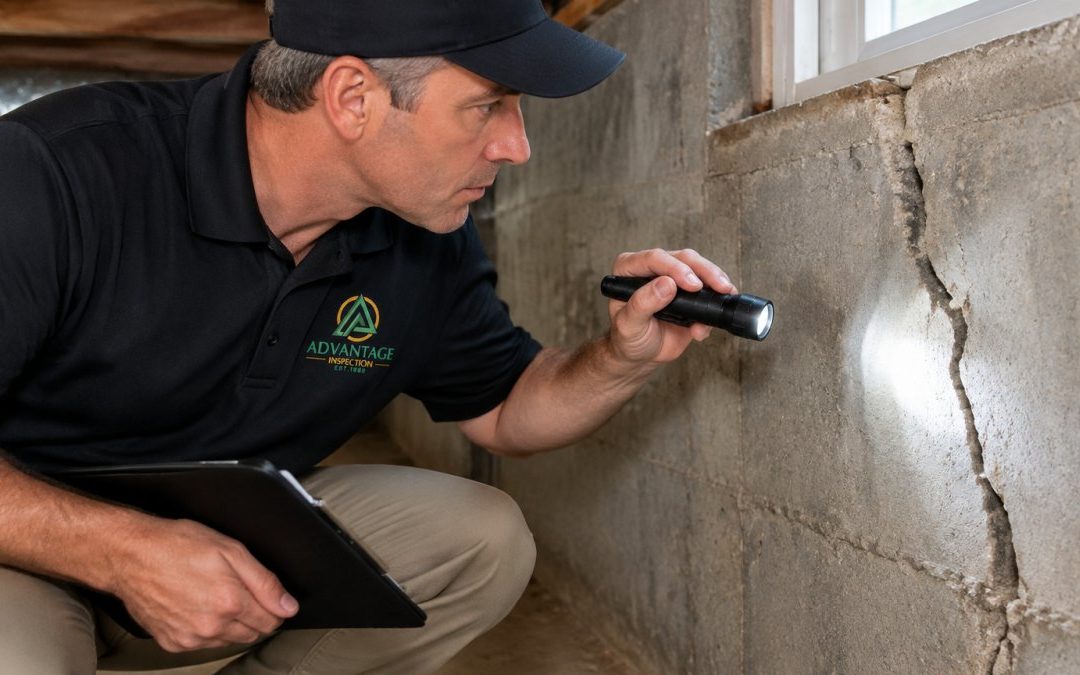
- Foundation walls: Look for cracks, bowing, or sections that lean inward.
- Joints and corners: Check where walls meet the floor and where corners sit.
- Piers and posts: Look for posts that sit off their bases or piers that show cracking.
- Beams and joists: Watch for sagging, cracked or notched framing.
- Moisture: Note staining, efflorescence (white mineral deposits), or standing water.
Bowing walls and horizontal cracks in block or poured concrete can warrant a closer review by a specialist. Water marks and dampness are also worth recording, since moisture can affect both the foundation and the framing above it.
Bring a flashlight and look at the walls closely. Dark spots, damp patches and musty smells are signs to note, even if the cause is not clear from the surface.
Foundation Problems vs Settling: How to Tell the Difference
Many homes settle a little over time, and not every sign means a serious problem.
What settling looks like. Settlement is often gradual and may stabilize as the soil and framing adjust.
What ongoing movement looks like. Movement that continues over time tends to leave a different signature.
How to sort what you see. Use these questions:
- Did the sign appear suddenly, or has it been there for years without change?
- Is the crack or gap getting wider or longer when you compare dated photos?
- Are several signs showing up in one area at once?
- Is there offset or displacement, where one side of a crack sits higher or lower than the other?
- Is water pooling near the foundation or draining toward it?
How to measure change. Mark the ends of a crack with a pencil, date the marks, and photograph the crack with a measuring tool in the frame. Repeat every few months.
What a visual check cannot tell you. A visual inspection cannot determine the cause of movement or measure how much the structure has moved.
Watch out: It is easy to read a single crack as proof of a serious problem, or to dismiss a widening crack as cosmetic because it was small the first time you saw it.
Water Management Checks That Tie to Foundation Risk
Water is one of the most common contributors to foundation stress. Soil that repeatedly swells and shrinks as it gets wet and dries out can put pressure on a foundation over time. For that reason, drainage around the home deserves attention during any inspection.
Check these water-related items:
- Grading: Does the soil slope away from the house on all sides?
- Gutters and downspouts: Do they discharge several feet away from the foundation?
- Splash blocks or extensions: Are they in place and directing water away?
- Plumbing: Are there signs of leaks, such as damp spots, staining or a musty smell?
- Landscaping: Are large plants or trees planted close to the foundation?
Simple maintenance steps can reduce the risk of water-related stress. Our exterior maintenance and drainage guidance explains how to keep the home’s perimeter protected. Keep gutters clear, extend downspouts away from the house, and check that soil slopes away from the foundation. These steps are general good practice, and a specialist can advise on what suits a particular property.
When to Get a Foundation Specialist Inspection After Your Home Inspection
A general home inspection is the right first step for most buyers and sellers. It reports visible conditions and flags items that need a closer look. It is not designed to determine the cause or extent of foundation movement.
Consider a foundation specialist inspection when:
- The home inspection notes several foundation-related signs
- Cracks are wide, growing, or show offset or displacement
- Walls are bowing or leaning
- Floors are noticeably out of level in more than one area
- Doors and windows bind in a pattern across the home
- You plan to buy and want more information before closing
A specialist can take measurements, evaluate the structure in more detail, and recommend any follow-up work. Before booking one, it helps to understand what inspection protection covers for your purchase. Repair or remediation work is performed by a licensed contractor, not by the inspection company. A home inspection documents what is visible and can help you understand what the findings mean for your next decision.
Bring your home inspection report, your photos and your notes to any follow-up conversation. Clear records help everyone understand what was observed and when.
Frequently Asked Questions
What are the first signs of foundation problems?
Common early signs include diagonal, horizontal or stair-step cracks in drywall, plaster or masonry; doors and windows that stick or no longer latch; gaps between walls and ceilings or floors; and floors that feel uneven or sloped. A single sign does not confirm a foundation problem. Inspectors look for several signs together, note their location and width, and check whether they appear to be getting worse. Visible conditions are documented at the time of inspection and do not identify the cause of any movement.
How does an inspector check the foundation during a home inspection?
A general home inspector looks at the visible parts of the foundation, such as exposed concrete or block walls in a basement or crawl space, along with the interior walls, floors and doors. They note cracks, bowing, moisture staining and signs of water intrusion, and they review grading and drainage around the home. They also check for visible movement in the structure. A general home inspection cannot confirm structural soundness or predict future performance, so findings are recorded as observations with limits stated.
Can a home inspector tell whether a crack is structural?
A home inspector can describe a crack’s location, pattern, width and apparent condition, and can note related signs such as sticking doors or uneven floors. Determining whether a crack reflects structural movement generally requires a specialist evaluation, and the inspector’s report will state that limit. Cosmetic cracks are common in drywall and concrete, so the pattern, width, and whether the crack is changing over time all matter when deciding on follow-up.
When should I get a foundation specialist inspection?
Consider a foundation specialist evaluation when the home inspection notes several interior and exterior signs together, cracks that appear to be widening, bowing or leaning walls, or significant uneven floors. Your inspection report describes what was visible; a specialist can take measurements and recommend next steps. Any repair work would be handled by a licensed contractor, not the inspection company.


Recent Comments