
Table of Contents
- Start With a Room-by-Room Home Viewing Checklist for Buyers
- Common Signs of Structural Problems in a House
- How to Spot Foundation Problems: Cracks, Settlement, and Heaving
- Doors, Windows, Floors, and Roof: Secondary Clues to Structural Issues
- Water Damage, Dampness, and Chimney Warning Signs
- When to Bring In a Structural Engineer for a House Inspection
- What to Do After You Spot a Warning Sign
- Frequently Asked Questions
Last Updated: October 17, 2026
Start With a Room-by-Room Home Viewing Checklist for Buyers
Learning to identify structural issues during viewing comes down to knowing where to look and what to write down.
This guide from Advantage NC covers the exact sweep we recommend to every buyer.
Bring a flashlight, a phone camera, and this checklist:
- Foundation walls: look for cracks, bowing, or white powder
- Ceilings: check for stains, sagging, or fresh paint patches
- Floors: feel for slopes and bounce near walls
- Doors and windows: open and close every one
- Roof: scan from the yard with binoculars
- Chimney: check the lean from two angles
- Basement and crawlspace: smell for damp, look for water lines
- Attic: check rafters for sag, stains, or rot
A structural issue is any defect in the load-bearing parts of a home, including the foundation, framing, roof structure, and the connections between them. Catching one early changes how you negotiate.
U.S. Department of Housing and Urban Development homebuyer guidance
Exterior Walk-Around
Start outside and walk the full perimeter. Look at the line where the walls meet the ground. A straight, even line is good. A wavy or stepped line suggests foundation movement.
Check the roof from across the street. Sagging ridgelines, missing shingles, and rusted flashing are visible from the ground. Then look at the chimney: a leaning chimney usually points to a foundation problem under it.
Interior Room Sweep
Inside, work from the top down. Check ceilings for discoloration first, then walls, then floors. Open every closet and look at the corners, where cracks and stains show up before anywhere else.
Common Signs of Structural Problems in a House
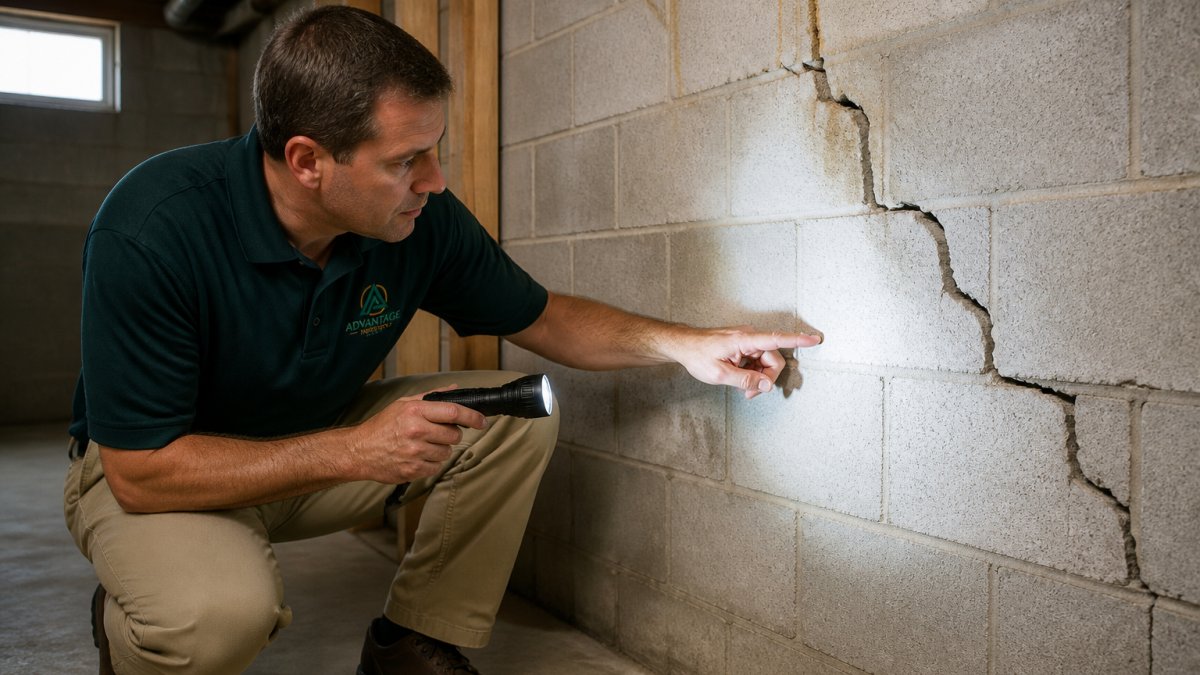
The clearest signs of structural problems in a house are cracks in walls or foundations, doors and windows that no longer close, uneven floors, and a sagging roof. One sign alone may be cosmetic. Two or more together usually means something is moving.
Here is how we group them:
- Cracks: diagonal, stair-step, or wide cracks in walls and foundations
- Movement clues: sticking doors, jammed windows, sloping floors
- Roof clues: sagging lines, leaks, ceiling stains
- Water clues: dampness, efflorescence, rot in timbers
- Chimney clues: leaning stacks, cracked mortar
Never assume a crack is cosmetic because it looks thin. Fresh paint over a crack, or a crack that lines up with one on the outside wall, is a red flag that a seller may have covered up movement.
How to Spot Foundation Problems: Cracks, Settlement, and Heaving
Foundation problems show up as cracks, settlement, or heaving. Settlement is the ground sinking under part of the house, which pulls walls down and opens cracks. Heaving is the opposite: soil pushing up, often from clay that swells when wet. Both move the foundation, but they leave different fingerprints, and reading those fingerprints is the core skill for identifying structural issues during a viewing.
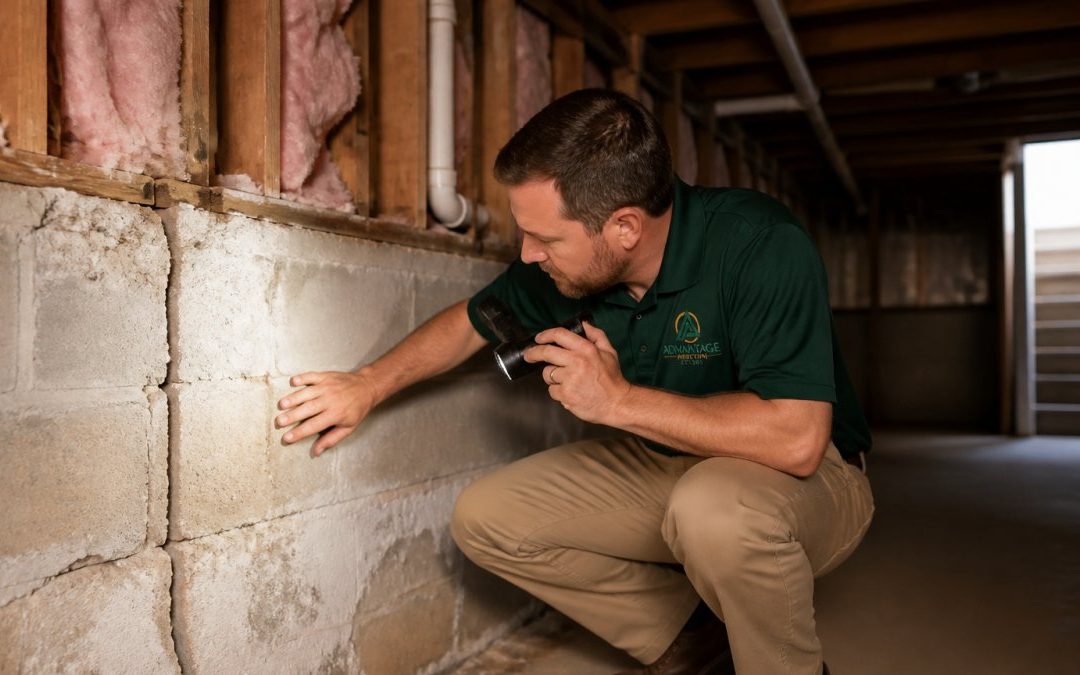
Walk the basement or crawlspace with a flashlight and look for:
- Diagonal cracks at wall corners
- Stair-step cracks through block or brick
- Horizontal cracks in a foundation wall, which are more serious than vertical ones
- Doors that stick at the top corner
- Gaps where the wall meets the floor
- Bowing or leaning foundation walls, which suggest soil pressure from outside
- White, powdery efflorescence, which points to moisture moving through the concrete
Judging Crack Severity
Width alone does not tell you whether a crack matters. A visual check cannot diagnose the cause, only a structural engineer can do that, but it can tell you which cracks deserve a second look.
Location. Cracks at the corners of foundation walls, above window and door openings, and where an addition meets the original house are the ones to watch.
Direction. Vertical cracks are usually the least concerning and often come from concrete curing.
Width. A hairline crack under 1/8 inch is often cosmetic.
Pattern. A single crack is one data point.
Active or dormant. Look for fresh edges, paint that has cracked along the line of the crack, or a crack that lines up with one on the outside wall.
Settlement vs. Heaving at a Glance
Settlement usually shows as cracks that are wider at the top, doors that stick near the top corner, and floors that slope toward the settling side. Heaving often shows as cracks that are wider at the bottom, doors that bind near the floor, and floors that slope away from the raised area. Neither pattern is a diagnosis, but matching what you see to one of them helps you describe the issue clearly to an inspector or engineer.
Doors, Windows, Floors, and Roof: Secondary Clues to Structural Issues
Sticking doors and windows are among the most reliable secondary clues to structural issues. When a frame racks out of square, the door catches at the top or the window sash binds. That is the house telling you something moved. Such persistent shifts often signal deeper structural instability that mirrors the patterns found in hidden maintenance issues that frequently plague aging multi-unit buildings.
Test every door and window during the viewing. Open them fully, close them, and listen for scraping. Then check:
- Floors: walk the perimeter of each room. A noticeable slope toward one wall, or a springy feel, points to joist or foundation problems.
- Roof: look for sagging between rafters from inside the attic, plus water stains on the sheathing.
- Timbers: probe any dark or crumbly wood in the attic or crawlspace. Rotted timbers lose strength fast.
Bring a small marble or ball bearing. Set it on the floor in each room and watch which way it rolls. It is the fastest way to find a slope you would miss on foot.
Water Damage, Dampness, and Chimney Warning Signs
Water is the most common cause of structural damage in a house. It rots timbers, washes out soil under footings, and freezes inside cracks to widen them. Look for water stains on ceilings, tide lines in the basement, and musty smells in the crawlspace.
Chimney cracks deserve their own check. Look up the stack from outside and inside. Cracked mortar, a visible lean, or a gap where the chimney meets the roof all point to movement or water entry.
FEMA guidance on flood damage and home safety
When to Bring In a Structural Engineer for a House Inspection
Bring in a structural engineer when you see wide or shifting cracks, a sagging roof, a leaning chimney, or two or more warning signs together. A home inspector flags problems. A structural engineer diagnoses them and tells you what a repair involves.
Know the difference before you call:
| Professional | What they do | When to call |
|---|---|---|
| Home inspector | Full visual survey of the house | Every purchase |
| Structural engineer | Diagnoses cracks, movement, and framing | Serious or unclear findings |
| Foundation contractor | Quotes and performs repairs | After a diagnosis |
A standard home inspection is not an engineering analysis. If the report says “recommend further evaluation,” that is your cue.
What to Do After You Spot a Warning Sign
Do not panic and do not ignore it. A viewing is not a structural survey, and the goal is not to diagnose the problem yourself, it is to document what you saw, ask the right questions, and escalate to the right professional before your deadlines. Here is the sequence that turns a warning sign into an actionable finding.
1. Document Before You Leave
Photograph the issue with something for scale, a coin, a tape measure, or your hand. Note the room, the wall, and the direction the crack runs. If you see multiple signs, photograph each one and note how they relate: a crack in the basement, a sticking door on the first floor, and a sloping floor in the same corner are more meaningful together than any one alone.
2. Ask the Seller or Agent
Bring a short list of questions and write down the answers. Useful prompts include:
- How long has this been here, and has it changed since you noticed it?
- Have there been any repairs, and were permits pulled?
- Has the home ever been inspected by a structural engineer, and is the report available?
- Have there been insurance claims for water, foundation, or roof damage?
- Are there any warranties or guarantees on past work?
- Is there a recent survey or disclosure report we can review?
Answers are not proof, but inconsistencies between what you see and what you are told are worth flagging to your inspector.
3. Know What Not to Touch
Some areas should not be disturbed during a viewing. Do not pry at cracks, probe soft wood, open sealed crawlspace hatches, or walk on a roof. Do not move stored items to reach a foundation wall if doing so risks injury. If a floor feels soft or a ceiling is sagging, keep people out from under it. Note the area and let the inspector or engineer assess it safely.
4. Escalate to the Right Professional
A home inspector flags problems. A structural engineer diagnoses them and tells you what a repair involves. A foundation contractor quotes and performs repairs, but only after a diagnosis. If the inspection report says “recommend further evaluation,” that is your cue to call an engineer, not a contractor.
Schedule the inspection early enough that any follow-up engineering assessment can happen before your inspection contingency deadline. A report you can act on is worth more than a guess you have to negotiate around.
5. Use the Findings to Negotiate
A detailed report gives you facts to negotiate with, not guesses. You can ask for a repair credit, a price reduction, or a seller-paid engineer assessment. What you should not do is accept a verbal assurance that a crack is “nothing” without documentation. That is where we come in: our team has completed over 500,000 inspections, and our reports are built for the due diligence process.
Frequently Asked Questions
What structural problems should I look for during a home viewing?
Focus on visible warning signs: diagonal or stair-step cracks in walls, cracks around windows and doorways, doors that stick or will not close, uneven or sloping floors, a sagging roof line, water stains on ceilings, and a leaning chimney. Check exterior walls for wide or widening cracks and note any dampness or discoloration. These signs of structural problems in a house do not confirm damage on their own, but they justify a closer look by a licensed inspector or structural engineer before you commit.
How can I tell whether a wall crack is structural?
Width, direction, and location matter more than the crack itself. Hairline cracks under 1/16 inch in drywall or plaster are often cosmetic settling. Cracks wider than 1/8 inch, diagonal cracks that run from corners of doors or windows, stair-step cracks in brick or block, and cracks that appear on both the interior and exterior of the same wall are more concerning. If a crack is wide enough to fit a coin or is actively widening, treat it as a potential structural issue and request a professional evaluation.
Are sloping floors always a sign of structural damage?
No. Older homes often have slight slopes from long-term settlement, and a small dip near a stairway is common. What matters is the degree and direction. A floor that slopes noticeably toward the center, feels bouncy underfoot, or pairs with cracks in nearby walls or sticking doors points to possible foundation movement or damaged floor framing. Note the location and how pronounced the slope feels, then ask the seller or inspector to explain it before you rely on it as a negotiating point.
When should I hire a structural engineer for a house inspection?
Bring in a structural engineer when you see multiple warning signs together, when cracks are wide or widening, when a chimney leans, or when a general home inspector flags a possible structural concern. A structural engineer house inspection goes beyond a standard home inspection by evaluating load paths, foundation performance, and repair options. In the Triangle area, schedule this before your due diligence period ends so you have time to negotiate or walk away based on the findings.
A house can look perfect and still be moving. The difference between a smart purchase and an expensive surprise is what you check, and who you bring in when something looks wrong. Advantage NC brings decades of inspection experience, detailed reports, and a 30-day protection program to every viewing. Schedule your inspection and walk into closing with the facts.

Recent Comments