

Last Updated: November 5, 2026
Quick Summary
Radon testing is not legally required in every situation, but it is the only way to know a home’s radon level, and the EPA recommends testing during a purchase or sale. Fewer than 25% of existing U.S. homes have been tested, so a property you are considering may never have had a reading.
- Radon is a radioactive gas that forms naturally from uranium breaking down in soil, rock, and water.
- A short-term radon test takes 2 to 90 days, with closed-house conditions held for at least 12 hours before and during the test.
- The EPA’s action level is 4 pCi/L, and the agency recommends mitigation at or above that level.
- The EPA recommends retesting 24 hours to 30 days after a mitigation system is installed, then every two years.
- A DIY test kit suits curious homeowners, while a professional tester suits buyers and sellers in a transaction.
Table of Contents
- Why Radon Testing Matters More Than Most Homeowners Realize
- Is Radon Testing Necessary for Homes in Every Situation?
- Is a Radon Test Required When Buying a Home?
- Radon Test Kit vs. Professional Tester: Which Should You Use?
- How Long Does a Radon Test Take?
- What to Do If a Radon Test Is High
- Schedule Your Radon Test Before You Close
- Frequently Asked Questions
Why Radon Testing Matters More Than Most Homeowners Realize
Radon testing is the only way to know whether a home’s indoor air carries a radioactive gas that has no color, no smell, and no taste. A 2018 study of realtor knowledge and attitudes found that fewer than 25% of existing U.S. homes had been tested for radon, according to the peer-reviewed study summary.
Advantage NC has completed more than 500,000 inspections since 1988, and radon questions come up often in buyer conversations. Below, we explain when testing is truly necessary, how the process works, and what to do with the result.
The Health Risk Hiding in Your Indoor Air
Radon is a radioactive gas that forms naturally from uranium breaking down in soil, rock, and water. (the EPA) It seeps into homes through cracks and gaps, then builds up indoors. The American Lung Association says all buildings need regular testing, and the EPA’s Home Buyer’s and Seller’s Guide to Radon recommends testing during a purchase or sale.
You cannot see, smell, or taste radon. A home next door to a tested home can read completely differently.
How Radon Gets Into a Home
Radon moves through soil gas and enters where the building touches the ground:
- Cracks in foundation slabs and walls
- Gaps around pipes and sump pumps
- Basement and crawl space floors
Once inside, radon accumulates. Upper floors usually read lower, which is why test placement matters.
Is Radon Testing Necessary for Homes in Every Situation?
No, testing is not required by law in every situation, but it is the only way to know a home’s radon level. That distinction trips people up: not mandatory does not mean not necessary.
Some homes carry higher risk:
- Homes with a basement or slab-on-grade foundation
- Houses in radon zones flagged by state guidance
- Any home that has never been tested
Watch out: skipping a test because a neighbor’s result was low is a common mistake. Radon concentrations vary from house to house, sometimes dramatically.
Is a Radon Test Required When Buying a Home?
A radon test is not legally required when buying a home, but the EPA recommends testing during a purchase or sale, and many buyers treat it as part of due diligence alongside a standard home inspection. The gap between “not required” and “not necessary” is where buyers get hurt: a property can close with a radon problem no one measured.
Timing the Test Inside Your Contingency Window
A short-term radon test takes 2 to 90 days, and closed-house conditions must hold for at least 12 hours before and during the test. In practice, the test needs to be scheduled early in the inspection period, not at the end, so the result lands before the contingency deadline.
Watch out: a test started after the contingency deadline has passed gives you information but no leverage. Confirm the deadline in writing before scheduling.
Contingency Language and Who Pays
Radon contingencies are not standardized. Some contracts include a specific radon contingency; others fold radon into a general inspection contingency. If the contract is silent, the buyer can request an amendment adding radon testing as a contingency before signing. Who pays is a negotiable term.
A workable contingency clause typically specifies:
- The testing method and duration (for example, a short-term test of at least 48 hours)
- The action level that triggers negotiation (commonly 4 pCi/L)
- Who selects and pays the tester
Access, Scheduling, and Closed-House Conditions
A radon test in an occupied home requires cooperation. The seller must keep doors and windows closed (normal entry and exit is fine), avoid running whole-house fans or opening windows for ventilation, and leave the test device undisturbed. Test placement matters: the device belongs in the lowest livable level of the home, away from drafts, exterior walls, and high humidity.
Handling the Result Before Closing
If the result is below 4 pCi/L, the buyer can proceed and note the test date for future retesting. If the result is at or above 4 pCi/L, the usual paths are:
- Seller mitigates before closing. The seller installs a system and provides a post-mitigation test; the buyer verifies the retest.
- Buyer receives a credit. The buyer negotiates a credit and arranges mitigation after closing.
- Price adjustment. Less common, but used when the buyer wants to control the contractor and timeline.
- Buyer walks. Available only if the contingency was written to allow it.
A confirmatory test can be wise before negotiating, because a single short-term result at or above the action level can be an outlier. Build time for that second test into the contingency window rather than discovering the need for it on the last day.
Buyers weighing a broader budget should also review the hidden costs of buying older homes, since radon mitigation is one of several items that can surface late.
Radon Test Kit vs. Professional Tester: Which Should You Use?
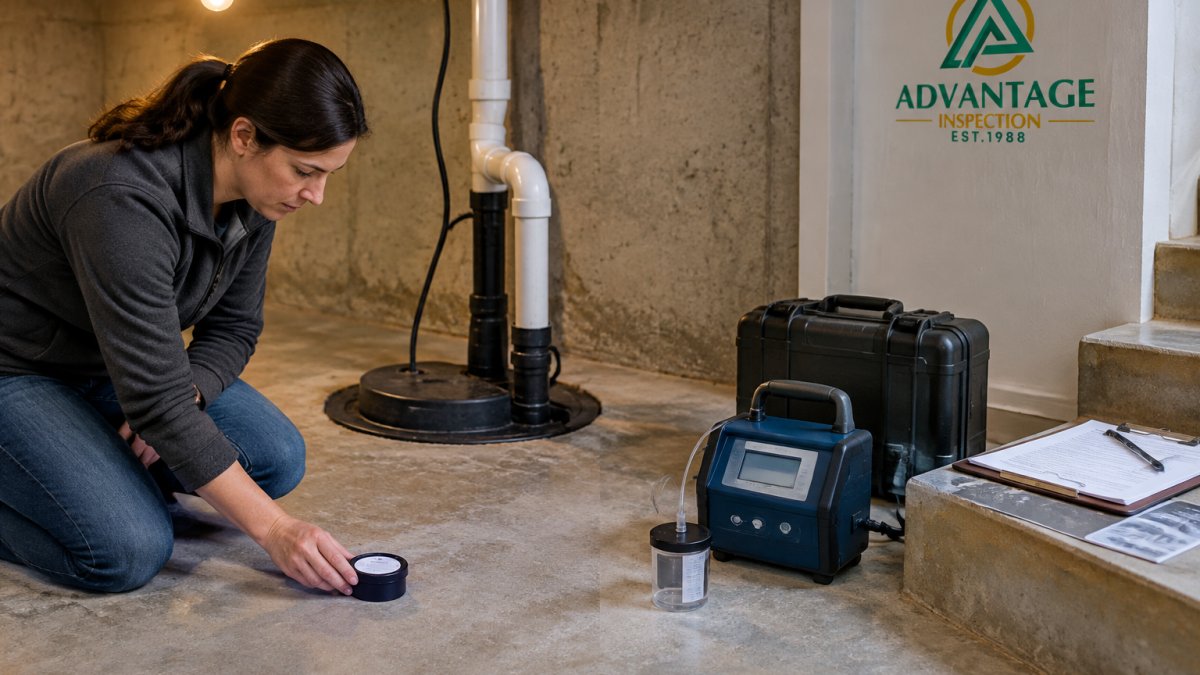
A DIY test kit suits a homeowner who wants a quick read on an existing home. A professional tester suits anyone in a real estate transaction, where timing and documentation matter.
| Factor | DIY Test Kit | Professional Tester |
|---|---|---|
| Cost | Lower upfront | Higher, includes labor |
| Speed | Mailed to a lab | On-site scheduling |
| Placement accuracy | Depends on you | Trained placement |
| Documentation | Basic | Report for due diligence |
| Best for | Curious homeowners | Buyers and sellers |
(/professional-radon-testing-service-cost/) breaks down what drives the price.
How Long Does a Radon Test Take?
A short-term test runs 2 to 90 days, while a long-term test runs more than 90 days. Because radon testing is only one part of assessing a home’s environment, indoor air quality testing can help put its timing and conditions in a broader context.
A few practical rules:
- Keep the test device away from drafts and exterior walls
- Do not move the device once testing starts
- Record start and end dates
Long-term testing gives a better picture of the yearly average. A confirmatory test is wise when a first result comes back borderline.
What to Do If a Radon Test Is High
A radon result is reported in picocuries per liter (pCi/L), a measure of radioactive decay per unit of air volume. The EPA’s action level is 4 pCi/L, and the agency also recommends considering mitigation when a long-term test reads between 2 and 4 pCi/L. The number on the report is a starting point, not a verdict, what you do next depends on which band the result falls into and how the test was run.
Reading the Result Against the Action Level
- Below 2 pCi/L: No action needed beyond retesting every few years or after major renovations. Levels this low are near outdoor background.
- Between 2 and 4 pCi/L: Consider a confirmatory test, especially if the first test was short-term. Many practitioners recommend a long-term test (more than 90 days) to establish the yearly average before committing to mitigation.
- At or above 4 pCi/L: The EPA recommends mitigation. A single short-term result at this level should be confirmed with a second short-term test under closed-house conditions before you sign a mitigation contract, unless timing or a real estate deadline makes confirmation impractical.
Watch out: a short-term test run with windows open or the HVAC system cycling outdoor air can read artificially low, and a test placed in a drafty location can read artificially high. Confirm conditions before acting on a borderline number.
Confirmatory Testing Protocol
A confirmatory test is a second measurement taken to verify the first. The EPA’s guidance for real estate transactions is to run a second short-term test when the first result is at or above 4 pCi/L, then use the average of the two (or the higher of the two, depending on the guidance you follow) to decide. For a homeowner not under a deadline, a long-term test is the stronger confirmation because it captures seasonal variation, radon levels often run higher in winter when the house is closed and the stack effect is strongest.
Practical rules for a valid confirmatory test:
- Use the same device type and a comparable location as the first test.
- Maintain closed-house conditions for at least 12 hours before and throughout the test.
- Do not move the device or disturb it once the test begins.
- Record start and end times and note any condition violations.
- If conditions were violated, discard the result and retest rather than averaging a flawed reading.
What Mitigation Actually Involves
Mitigation is not a single product; it is a system sized to the house. The most common approach is active soil depressurization (ASD): a PVC pipe runs from a suction point beneath the slab or through the crawl space to a fan, which vents soil gas above the roofline. A qualified mitigator seals major entry points, installs the pipe and fan, and typically posts a manometer to show the system is drawing suction.
A few trade-offs to expect:
- Sealing alone is not mitigation. Caulking cracks helps but does not reliably reduce radon without a depressurization system.
- Fan noise and routing matter. The fan is usually mounted in an attic, garage, or exterior wall; placement affects noise and aesthetics.
- Retesting after installation is standard. A post-mitigation test confirms the system is working and gives you a documented new level.
When to Retest After Mitigation
The EPA recommends retesting 24 hours to 30 days after a mitigation system is installed, then every two years, and again after any major renovation, HVAC change, or foundation work. If a post-mitigation test still reads at or above 4 pCi/L, the system needs adjustment, call the mitigator back rather than assuming the reading is an outlier.
Sellers facing a high result should read our seller guide before listing, since remediation choices affect timelines and disclosure.
Schedule Your Radon Test Before You Close
The gap between “not required” and “not necessary” is where buyers can be caught off guard. Fewer than a quarter of existing homes have been tested, so a property you are considering may never have had a reading.
Advantage NC has performed over 500,000 inspections with a verified 4.9-star rating from more than 1,900 reviews. We offer radon gas testing alongside home inspections, sewer scopes, and ancillary services, with detailed reports built for due diligence and a 30-day protection program.
Frequently Asked Questions
What are signs your house has radon?
There are no visible signs of a radon problem. Radon is an invisible, odorless, radioactive gas, so you cannot see it, smell it, or taste it. The only way to know whether your home has elevated levels is through radon testing. A study published in 2018 found fewer than 25% of existing U.S. homes had ever been tested, meaning most homeowners have no idea what their indoor radon concentration is. Testing is the sole reliable method for detecting radon exposure risk.
Do air purifiers clear out radon?
No. Standard air purifiers and HEPA filters do not remove radon gas. Radon is a gas that seeps in from soil through foundation cracks, crawl spaces, and other ground-contact points. Air purifiers filter particles, not radioactive gas. The EPA-recognized approach for reducing indoor radon is a mitigation system that vents soil gas away from the foundation before it enters the home. If a radon test shows elevated levels, professional mitigation is the appropriate response, not a consumer air filter.
Is radon testing necessary if my home is new?
Yes. Newer construction does not guarantee low radon levels. The 2018 study noted only 5% to 10% of new homes used some form of radon prevention. Radon comes from the soil beneath the home, and construction methods vary widely. The EPA recommends testing all homes regardless of age. A new home in a high-risk radon zone can still have elevated indoor radon concentrations. Testing after move-in, or during the purchase transaction, gives you the data you need to act.
Should I get a radon test with a home inspection?
Pairing a radon test with your home inspection is efficient and common during a real estate transaction. The home inspection covers structural and mechanical systems, while radon testing addresses indoor air quality and health risk. Scheduling both at the same visit saves time and ensures you have complete due diligence information before closing. If results come back at or above the EPA action level of 4 pCi/L, you can negotiate mitigation with the seller or plan for it after purchase.


Recent Comments