
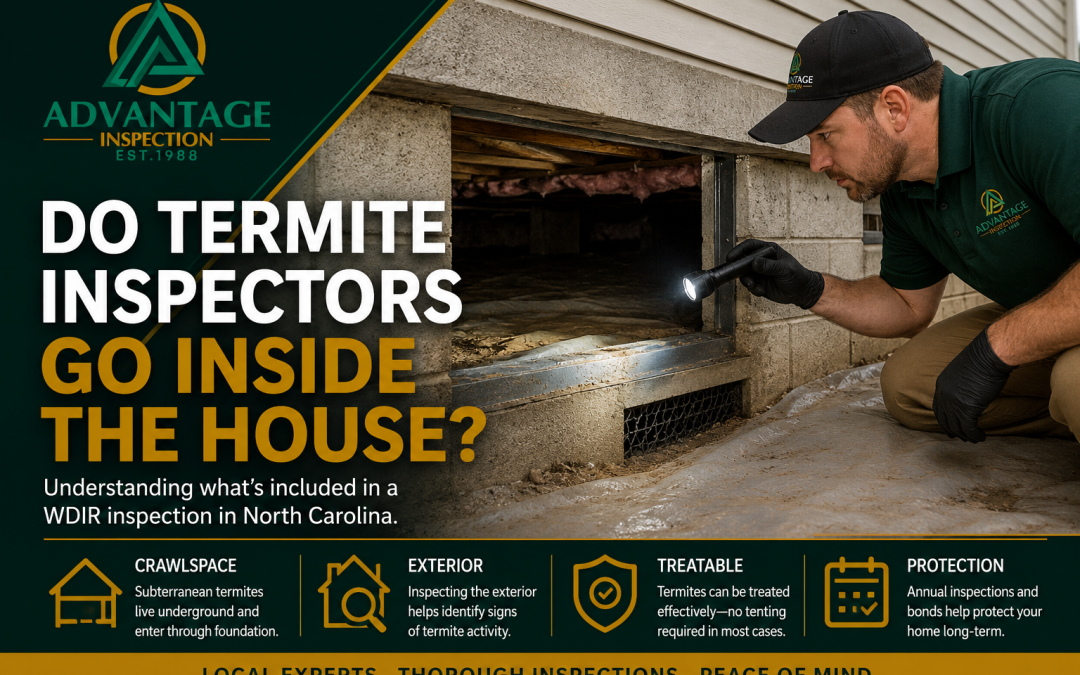
Is It Normal for a Termite Inspection to Only Include the Crawlspace and Exterior?
We recently received a great question from a local Realtor about what is actually included during a termite inspection in North Carolina.
Hey Dave, my client has recently purchased a variety of services from you all for two different homes. For her current purchase (under contract now), she is having her own pest company perform the WDIR inspection and is wondering whether it’s typical for them to only inspect the crawl space and the exterior. There is no garage at this home.
Thanks, Dave.
Allen
This is a very common question, especially for buyers who expect inspectors to go through every room in the house during a termite inspection. The short answer is yes… in many North Carolina homes, this is completely typical.
Why Termite Inspections in North Carolina Often Focus on the Crawlspace and Exterior
In North Carolina, the primary termite we deal with is the **subterranean termite**. As the name suggests, these termites live underground and depend on moisture from the soil to survive.
Unlike drywood termites found in some coastal or southern climates, subterranean termites do not typically live inside the wood structure itself full-time. Instead, they travel back and forth between the soil and the home to feed on wood.
Because of this behavior, the most important inspection areas are:
* Crawlspaces
* Foundation walls
* Exterior wood contact points
* Areas where moisture is present
* Penetration points into the structure
During the inspection, pest professionals are often looking for:
* Mud tubes along foundation walls
* Wood damage
* Active termite activity
* Conditions conducive to infestation
* Excessive moisture
Mud tubes are especially important because subterranean termites build them to protect themselves from sunlight and dehydration as they travel between the soil and the home.
Why They May Not Need to Inspect the Entire Interior
If the home has a crawlspace foundation and there are no visible signs of termite activity inside the living areas, the inspection is often limited to the crawlspace and exterior.
That is standard practice in many North Carolina WDIR (Wood Destroying Insect Report) inspections.
However, if the home is built on a slab foundation, the inspection process is usually different. Since there is no crawlspace access, inspectors will often inspect portions of the first-floor interior in addition to the exterior.
Every home is a little different, but the inspection areas are generally based on:
* Foundation type
* Accessibility
* Visible evidence
* Risk factors
* State reporting standards
The Good News About Subterranean Termites
The good news is that subterranean termites are usually very treatable when caught early.
In North Carolina, treatment commonly involves:
* Soil treatments around the foundation
* Trenching and injection methods
* Bait systems (like this one)
* Ongoing monitoring
Unlike some termite species in other parts of the country, tenting a home is generally not required here.
Most pest control companies also offer:
* Annual inspections
* Renewable termite bonds
* Repair warranties
* Retreat guarantees
These protection plans are extremely common and are often recommended for long-term peace of mind.
Our Recommendation for Homebuyers
For buyers in North Carolina, especially in older homes or homes with crawlspaces, we strongly recommend:
* Annual termite inspections
* Keeping crawlspaces dry
* Avoiding wood-to-soil contact
* Addressing drainage issues quickly
* Maintaining any existing termite bond or warranty
Termites are very common in our area. The key is early detection and proper maintenance.
Final Thoughts
Questions like this are great reminders that home inspections and termite inspections are two very different services. Buyers are often surprised by what is and is not included in each type of inspection.
If you ever have questions about what a WDIR inspection covers, we are always happy to help explain the process before inspection day.
Links from this Article
Crawlspace Inspections in North Carolina
What Is Included in a WDIR Inspection?
Why Annual Termite Inspections Matter
Common Crawlspace Problems We Find During Home Inspections
Should You Get a Termite Inspection When Buying a Home?
Understanding Your Home Inspection Report | What Every Homebuyer Needs to Know

Recent Comments