
Table of Contents
- What a Home Inspector Actually Checks: The Major Systems
- How Long Does a Home Inspection Take?
- Common Home Inspection Red Flags You Should Know
- Questions to Ask a Home Inspector Before You Hire
- The Importance of Radon Testing and Sewer Scopes
- What Home Inspectors Do Not Check
- Conclusion: Your Next Step After the Inspection
- Frequently Asked Questions
Last Updated: October 1, 2026
What a Home Inspector Actually Checks: The Major Systems
A home inspector check is a visual examination of a property’s accessible systems and components, and a home inspector check covers far more ground than most buyers expect. At Advantage NC, we have performed these evaluations across the Triangle since 1988, and the scope has stayed consistent: structural components, roofing, electrical, plumbing, HVAC, insulation, and interior surfaces. The American Society of Home Inspectors standards of practice defines the baseline for what a general inspection includes.
Structural Components and Foundation
The foundation sets the tone for everything else in the report. Inspectors look for foundation cracks, settlement patterns, and how the structure meets the ground. Hairline cracks in a poured wall are common and often cosmetic. Stair-step cracks in brick or block, or doors that no longer latch, tell a different story about movement.
Roof, Flashing, and Drainage
Roof evaluation focuses on roof shingles, flashing, and how water leaves the property. An inspector notes missing or lifted shingles, worn granules, and the condition of valleys and penetrations. Flashing around chimneys, vents, and skylights is where most leaks begin.
Electrical, Plumbing, and HVAC
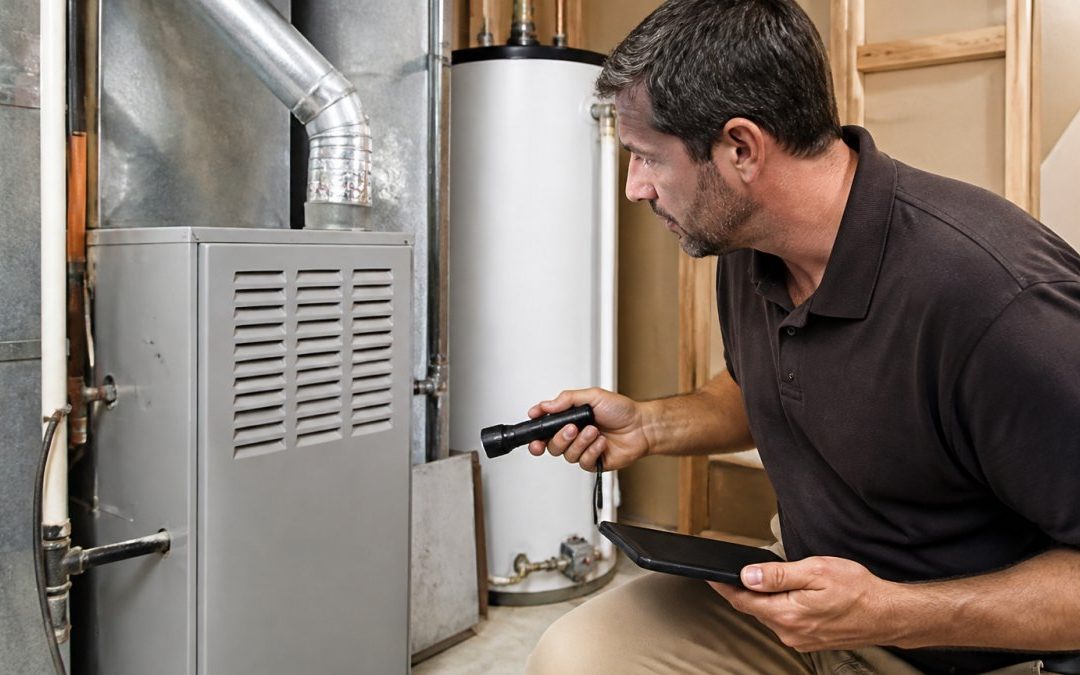
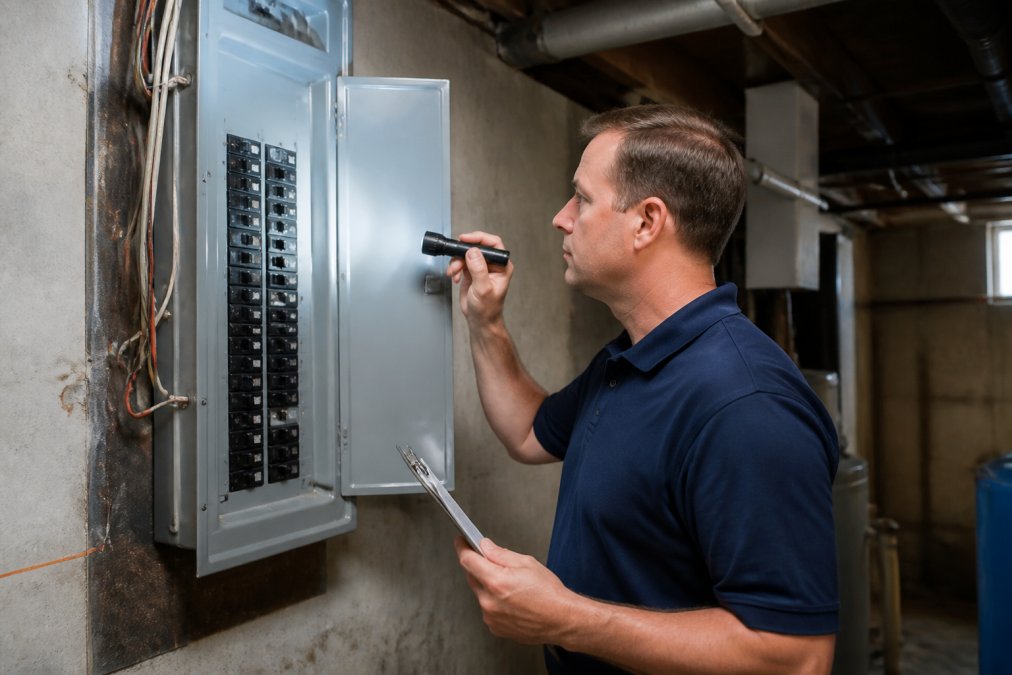
These three systems generate the most questions and the most expensive surprises. On the electrical side, inspectors examine the electrical panel, look for double-tapped breakers, and test GFCI outlets in kitchens, baths, and exterior locations. Wiring hazards like exposed splices or aluminum branch wiring get flagged for further evaluation.
How Long Does a Home Inspection Take?
A typical home inspection takes two to four hours, depending on the size, age, and condition of the property (What is a Home Inspection?). A small, newer home may wrap in under two hours. A large older home with a crawl space, multiple HVAC systems, and deferred maintenance can run four hours or longer.
Several factors push the timeline:
- Square footage and number of stories
- Age and complexity of major systems
- Accessibility of the attic, crawl space, and roof
- Whether the buyer attends and asks questions
Common Home Inspection Red Flags You Should Know
Red flags fall into two categories: safety hazards and expensive deferred maintenance. Safety issues include missing GFCI protection, improper electrical panel work, and gas appliance concerns. Cost issues include active roof leaks, foundation movement, and failing HVAC equipment.
| Red Flag | What It Usually Means | Typical Next Step |
|---|---|---|
| Stair-step foundation cracks | Possible settlement or soil movement | Structural engineer evaluation |
| Active roof leak or flashing damage | Water entry, possible decking damage | Roofing contractor estimate |
| Double-tapped breakers | Overloaded circuit risk | Licensed electrician repair |
| Disconnected HVAC ductwork | Wasted energy, uneven comfort | Duct repair or replacement |
| Slow drains throughout | Possible main line blockage | Sewer scope inspection |
Waiving the inspection contingency to strengthen an offer removes your only structured opportunity to discover major defects before closing. Buyers who skip it often inherit repair costs that dwarf any advantage gained in negotiation.
Questions to Ask a Home Inspector Before You Hire
The right questions separate a thorough inspector from a quick walkthrough. Start with credentials and scope, then move to what happens after the report lands.
- What does your inspection cover, and what do you exclude?
- Are you licensed or certified, and by which body?
- How long will the inspection take, and can I attend?
- What does the report include, and when will I receive it?
- Do you offer radon testing and sewer scopes, or refer them out?
- What happens if you miss something?
The Buyer’s Role During the Inspection
Most guides tell you to attend the inspection and then stop there. The real value is in how you attend. A general inspection is a visual, non-invasive assessment, so the inspector is narrating what can be seen in the moment, and that narration is the most useful part of the entire process.
- Arrive for the last hour, not the first. Inspectors often start on the roof and exterior, where there is little for you to observe. Joining near the end means you catch the interior systems, the panel, and the attic while the findings are fresh.
- Follow, but do not hover. Stay a few steps back so the inspector can work. Ask questions between systems, not mid-climb on a ladder.
- Ask “what does this mean for me?” not “is this bad?” Every finding has a severity and a cost range. The inspector can explain the mechanism, why a double-tapped breaker overheats, why a downspout dumping at the foundation causes basement moisture, even when they cannot quote a repair price.
- Bring a notebook or your phone. Note the location of each flagged item. When you read the report later, you will remember the context instead of guessing which bathroom had the slow drain.
- Ask which findings are safety issues versus maintenance items. That single distinction is what you will use in negotiation.
What to Ask the Inspector On-Site
Once you are walking the property, the pre-hire questions shift to real-time ones:
- “If you owned this house, what would you fix first?”
- “Which of these findings would you get a specialist to look at?”
- “Is this item at the end of its service life, or is it a maintenance issue?”
- “What did you not check today, and why?”
Bring the inspector’s pre-inspection agreement with you and skim the scope and exclusions section before you arrive. Knowing what is excluded in advance turns the walkthrough into a targeted conversation instead of a general tour.
The Importance of Radon Testing and Sewer Scopes
Radon testing and sewer scopes cover two of the most expensive problems a standard inspection cannot see. Radon is a colorless, odorless gas that enters homes through foundation gaps and crawl spaces. The EPA guidance on radon in homes recommends testing every home, and the only way to know the level is to test.
When a General Inspection Is Not Enough
A general inspection is a visual, non-invasive assessment. That scope is deliberately narrow, and it leaves several categories of risk entirely unexamined. Knowing when to bring in a specialist is the difference between a report that looks complete and one that actually protects you.
| Specialized Inspection | What It Finds That a General Inspection Cannot | When It Is Worth Scheduling |
|---|---|---|
| Radon test | Airborne radon concentration inside the home | Every home, per EPA guidance; especially homes with basements or crawl spaces |
| Sewer scope | Root intrusion, bellies, cracks, and blockages inside the main line | Homes older than roughly 20 years, or any home with mature trees near the service line |
| Mold assessment | Hidden mold behind walls, under flooring, or in HVAC components | After any known water intrusion, musty odors, or visible staining |
| Pest / termite inspection | Wood-destroying insects and organisms inside framing and sills | Any home with wood framing, especially in regions with high termite pressure |
| Structural engineer evaluation | The cause and severity of foundation movement | Stair-step cracks, sloping floors, or doors that no longer latch |
| Chimney inspection | Flue liner condition and internal masonry | Any home with a wood-burning fireplace or older chimney |
How to Sequence Specialized Inspections
The order matters as much as the list. A general inspection is the entry point, it tells you which specialists are actually needed. Scheduling every specialized service on every home wastes money and time. Scheduling none of them leaves the highest-cost risks unexamined.
A practical sequence:
- Book the general inspection first. Its findings tell you which specialists to call.
- Bundle the predictable ones. Radon and sewer scopes are cheap to add to the same visit and keep your contingency window intact.
- Trigger the conditional ones. Mold, structural, and chimney evaluations should follow a specific finding, not a hunch.
- Get one consolidated report. Multiple reports from multiple vendors are harder to negotiate from than a single packet.
Schedule radon testing and a sewer scope at the same time as the general inspection. Bundling them keeps your contingency window intact and gives you one consolidated report to negotiate from.
A general inspection that comes back “clean” does not mean the home is free of hidden risk. It means nothing visible was flagged. Radon, sewer lines, and hidden moisture are outside the standard scope by design, not because the inspector missed them.
What Home Inspectors Do Not Check
A general inspection is a visual, non-invasive assessment, and it has real limits. Inspectors do not dismantle systems, move stored items, or test buried components. That means certain items fall outside the standard scope:
- Inside walls, under floors, or behind finished surfaces
- Septic system function beyond visible components
- Well water quality and yield
- Chimney interiors beyond accessible sections
- Swimming pool and spa equipment
- Code compliance for past renovations
Conclusion: Your Next Step After the Inspection
The report is not the finish line. It is the start of a negotiation, and how you use it determines what you pay and what you inherit. Buyers who understand the findings, separate safety issues from maintenance items, and request the right specialist evaluations consistently get better outcomes.
Frequently Asked Questions
What is the biggest red flag in a home inspection?
Foundation cracks that indicate settlement, roof damage with active leaks, and electrical panel issues like outdated wiring or double-tapped breakers are among the most serious findings. These problems can cost thousands to repair and may signal deeper structural or safety hazards. Any defect that affects structural integrity, water intrusion, or electrical safety deserves immediate attention from a licensed contractor before you close.
What do home inspectors not check?
Standard home inspections are visual and non-invasive. Inspectors do not check inside walls, behind insulation, or underground. They typically do not test for radon, mold, asbestos, or sewer line condition unless you order those specialized services separately. They also do not evaluate cosmetic issues, determine code compliance, or assess the cost of repairs. Always clarify the scope with your inspector before the appointment.
How long does a standard home inspection take?
Most home inspections take two to three hours for an average-sized house. Larger homes, older properties, or those with crawl spaces and multiple HVAC systems can take four hours or more. The time depends on the home’s age, size, and condition. Attending the inspection lets you ask questions in real time and understand the findings directly from the inspector.
Do I need to be present during the home inspection?
You are not required to attend, but your presence adds real value. You can ask questions as the inspector works, see defects firsthand, and learn how the home’s systems operate. If you cannot attend, request a detailed report with photos and call the inspector afterward to walk through the findings. Many inspectors welcome buyer attendance and build time for questions into their schedule.
What should I ask a home inspector before hiring them?
Ask about their licensing, years of experience, and what the inspection covers. Confirm whether they carry errors and omissions insurance and whether the report includes photos. Ask if they offer radon testing, sewer scopes, or mold assessments. Also ask how soon you will receive the report and whether they are available for follow-up questions after you review it.
Are radon testing and sewer scopes part of a standard home inspection?
No, radon testing and sewer scopes are separate services. Radon is a radioactive gas that can accumulate in homes and cause lung cancer over time. A sewer scope uses a camera to inspect underground pipes for blockages, cracks, or tree root intrusion. Both are worth adding in many markets, especially for older homes, and should be scheduled alongside your general inspection.

Recent Comments