
Table of Contents
- What Drives the Cost of a Commercial Building Inspection
- Commercial Inspection Cost Per Square Foot: Why It Is Not a Flat Rate
- What a Commercial Building Inspection Scope Typically Covers
- Commercial Property Inspection Checklist: What Inspectors Examine
- Commercial Inspection Quote Comparison: How to Read Proposals Side by Side
- What to Expect During the Inspection and How Long It Takes
- Conclusion: Getting Accurate Pricing for Your Commercial Property
- Frequently Asked Questions
Last Updated: October 9, 2026
What Drives the Cost of a Commercial Building Inspection
The cost of a commercial building inspection depends on the size, complexity, and condition of the property, not on a single flat fee. At Advantage NC, we have completed more than 500,000 inspections since 1988, and the pattern is always the same: two buildings of equal square footage can carry very different inspection bills.
A small retail space with one HVAC system is a quick job. A multi-tenant office building with elevators, a loading dock, and a commercial kitchen is not. The inspector’s time, the number of systems to test, and the level of detail your lender requires all push the number up or down.
Below, we break down what actually moves the price, how quotes are structured, and what to expect on inspection day.
Building Size and Square Footage
Square footage is the biggest single factor in any quote. Inspectors price by the time it takes to walk, measure, and document the property, and a larger building simply takes longer.
That said, size alone never tells the full story. A 10,000-square-foot warehouse with open floor space may take less time than a 6,000-square-foot restaurant with grease traps, walk-in coolers, and a fire suppression system. Treat square footage as a starting point, not the final answer.
Systems, Structures, and Site Conditions
The number of building systems drives the second half of the price. Each system adds inspection time and report detail:
- HVAC equipment, including rooftop units and controls
- Electrical service, panels, and distribution
- Plumbing, including backflow devices and water heaters
- Roofing, including membrane type and drainage
- Structural elements, including foundations and framing
- Elevators, fire systems, and life-safety equipment
- Site work, including parking, grading, and drainage
Age and condition matter too. A well-maintained building is faster to inspect than one with deferred maintenance, water stains, or visible settling. When an inspector finds problems early, the walkthrough slows down because every issue needs photos, notes, and context in the report.
Commercial Inspection Cost Per Square Foot: Why It Is Not a Flat Rate
There is no universal per-square-foot rate for commercial inspection cost per square foot. The range varies by market, property type, and the depth of the scope, so any single number quoted online should be treated with caution.
What we tell clients is this: ask what the rate includes, not just what it is. Two quotes at the same per-square-foot figure can cover very different work. One may include a roof walk and a full HVAC survey. Another may exclude both and charge extra for them later.
A few factors shift the per-square-foot math:
- Property type. Retail, office, industrial, and mixed-use buildings each carry different system counts.
- Occupancy. An occupied building takes longer to inspect than a vacant one because of access and scheduling.
- Report depth. A lender-grade report with cost estimates takes more time than a simple condition summary.
- Travel and scheduling. Remote properties and rush timelines add cost.
The most common mistake we see is comparing quotes on price alone. A low per-square-foot rate that excludes the roof, HVAC, or structural review is not a bargain. It is an incomplete scope, and you will pay for the missing pieces later, often after closing.
::: Hidden liabilities often extend to mechanical systems like water supply protection, where neglecting backflow testing costs can lead to significant regulatory penalties and emergency repairs after the transaction concludes.
What a Commercial Building Inspection Scope Typically Covers
A commercial building inspection scope defines exactly what the inspector will examine, and it is the single most important part of any proposal. If the scope is vague, the price is meaningless.
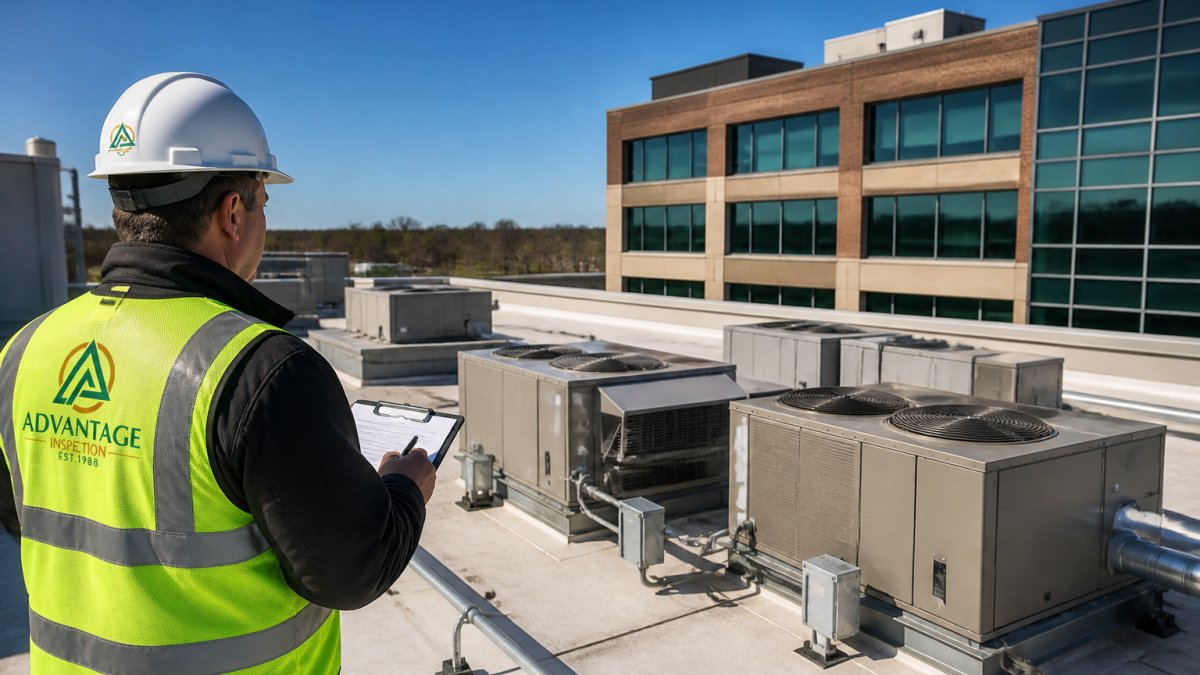
A standard scope for most commercial properties includes:
- Roof condition, membrane, flashing, and drainage
- Structural systems, including foundation and framing
- Exterior walls, windows, and doors
- HVAC, electrical, and plumbing systems
- Life-safety items such as fire alarms and extinguishers
- Site conditions, including paving, grading, and drainage
Some scopes add environmental testing such as radon, mold, or asbestos sampling. These are usually quoted separately because they require lab work and specialized equipment. Advantage NC offers radon gas testing and sewer scope inspections alongside commercial building inspections, so you can bundle services into one visit rather than scheduling multiple vendors.
Read the exclusions section of any proposal before the inclusions. That is where the real scope lives. If elevators, fire systems, or the roof are listed as excluded, you are not getting a full picture of the building.
Commercial Property Inspection Checklist: What Inspectors Examine
A commercial property inspection checklist keeps the walkthrough consistent from building to building. Here is the framework we use, organized by system so nothing gets skipped.
| Area | What Gets Checked | Why It Matters |
|---|---|---|
| Roof | Membrane, flashing, drains, penetrations | Roof replacement is one of the largest capital costs |
| Structure | Foundation, framing, load-bearing walls | Structural repairs are expensive and often hidden |
| HVAC | Rooftop units, controls, ductwork, filters | Aging systems drive near-term replacement budgets |
| Electrical | Service, panels, wiring, grounding | Capacity limits affect future tenant use |
| Plumbing | Supply lines, drains, water heaters, backflow | Leaks and code issues create liability |
| Life Safety | Fire alarms, sprinklers, exits, extinguishers | Required for occupancy and insurance |
| Site | Parking, grading, drainage, lighting | Deferred site work adds up quickly |
A checklist is not a substitute for judgment. Inspectors adapt it to the property. A restaurant gets a closer look at grease handling and ventilation. A warehouse gets more attention on slab condition and loading areas.
Commercial Inspection Quote Comparison: How to Read Proposals Side by Side
Comparing commercial inspection quotes means lining up scope, exclusions, timeline, and report format, not just the bottom-line price. Put two proposals next to each other and the differences show up fast.
Ask these questions of every proposal you receive:
- Does the scope list each system by name, or does it say “systems as accessible”?
- Are the roof and HVAC included, or quoted as add-ons?
- Is the report a narrative with photos, or a checklist with boxes?
- What is the turnaround time for the final report?
- Does the quote include a re-inspection if repairs are made?
- Are environmental services such as radon or sewer scope included or separate?
The quote with the longest scope is not automatically the best one. It is the one that matches your transaction. A buyer using lender financing needs a report that satisfies the lender. A seller preparing to list needs a report that surfaces issues before a buyer’s inspector does.
The right commercial inspection quote is the one whose scope matches your purpose. Match the report to the deal, not the deal to the cheapest report.
What to Expect During the Inspection and How Long It Takes
Expect a commercial inspection to take anywhere from a few hours to a full day, depending on size and complexity. A small retail building may wrap in two to three hours. A multi-story office or industrial property can take a full day or more.
Here is the typical sequence:
- Pre-inspection call. We confirm access, keys, and any tenant coordination needed.
- Exterior and roof walk. The inspector documents the building envelope and roof first.
- Interior systems review. HVAC, electrical, plumbing, and life-safety items get tested and photographed.
- Site review. Parking, drainage, and grading are checked last.
- Report delivery. Findings are compiled into a written report with photos and recommendations.
You do not need to be on site for the entire inspection, though many clients walk along for the last hour to hear findings in person. The written report is what matters for due diligence, and it is what your lender, attorney, or partner will read.
Marla Seagroves, one of our clients, put it simply: “I found the report very detailed and necessary during the due diligence process.”
For context on what a thorough property evaluation looks like, the U.S. Environmental Protection Agency’s guidance on indoor air quality and radon is a useful reference if environmental testing is part of your scope. The U.S. Small Business Administration’s commercial real estate resources also outlines what buyers should review before closing on an income property.
Conclusion: Getting Accurate Pricing for Your Commercial Property
Commercial inspection pricing is not something you can pin down from a generic rate table. It depends on your building, your scope, and your timeline. The only accurate number comes from a quote built around your specific property.
That is where Advantage NC comes in. We have performed over 500,000 inspections since 1988, and our commercial building inspection service includes a detailed report built for due diligence, access to ancillary services like radon gas testing and sewer scope inspections, and our 30-day protection program for added peace of mind.
Get started with Advantage NC and walk into your next commercial transaction with a clear picture of the property.
Frequently Asked Questions
How much does a commercial building inspection cost?
The cost of a commercial building inspection varies based on several factors, including building size, type, age, and the systems that need evaluation. There is no single flat rate because a 5,000-square-foot retail space requires far less work than a 50,000-square-foot warehouse with complex mechanical systems. For an accurate quote tailored to your property, contact Advantage NC directly with your building details.
Are commercial building inspections priced per square foot?
Many inspectors use square footage as one factor in pricing, but it is rarely the only one. The commercial inspection cost per square foot decreases as building size increases because fixed costs are spread over more area. However, building complexity, number of HVAC systems, roof type, and whether specialty reports are needed all influence the final price. A simple warehouse will cost less per square foot than a medical office with specialized equipment and plumbing.
What is included in a commercial building inspection scope?
A standard commercial building inspection scope covers the building’s structural components, roof, foundation, exterior walls, interior spaces, electrical systems, plumbing, HVAC, and life safety features such as fire exits and sprinkler systems. The inspector documents existing conditions, notes deferred maintenance, and identifies items that may need further evaluation by a specialist. The exact scope depends on the property type and the client’s needs.
How can I compare commercial inspection quotes fairly?
When comparing quotes, look beyond the total price. Check what the inspection covers, whether specialty systems like elevators or fire suppression are included, the inspector’s experience with your building type, and what the final report includes. A lower quote that excludes major systems may end up costing more if you need a second inspection. Request sample reports and confirm the inspector’s credentials before deciding.

Recent Comments