

Table of Contents
- What Professional Radon Testing Service Cost Covers
- What to Expect During a Radon Test
- How Long Does Radon Testing Take?
- Radon Monitor vs Test Kit: Which Method Fits Your Timeline
- Professional Radon Testing vs DIY: Where the Money Goes
- How to Compare Quotes and Verify a Certified Measurement Professional
- Reading Your Results and Deciding What Comes Next
- Frequently Asked Questions
Last Updated: October 16, 2026
What Professional Radon Testing Service Cost Covers
Professional radon testing service cost reflects three things: the measurement device, the trained technician’s time, and the lab analysis or report that follows. Radon is a radioactive gas that seeps from soil into homes with no smell, taste, or color, which is why testing is the only way to find it. Because pricing varies by market, home size, and testing method, we quote every job individually.
Device, Labor, and Report Fees
A professional radon test bundles several line items: the device (a continuous radon monitor or passive detector), the labor (the certified professional’s time to deploy and retrieve it), and the report (the lab analysis and documentation you receive afterward).
- Device rental or purchase and calibration
- On-site placement and pickup by a trained technician
- Laboratory analysis, when a passive detector is used
Each item exists for a reason. A monitor must be calibrated to read accurately. A report must be clear enough to act on. When a quote drops one of these, the price isn’t lower; the service is smaller.
What a Low Quote Often Leaves Out
The cheapest quote is rarely the cheapest test. A low price usually means a shortened test window, a single device in one spot, or no documentation for a lender or attorney.
A quote that skips calibration records, a written report, or proper closed-house conditions is not a bargain. You may pay again for a second test, and a real estate deadline may not wait for it.
Ask what the fee includes before comparing numbers, two quotes are only comparable when they cover the same steps.
What to Expect During a Radon Test
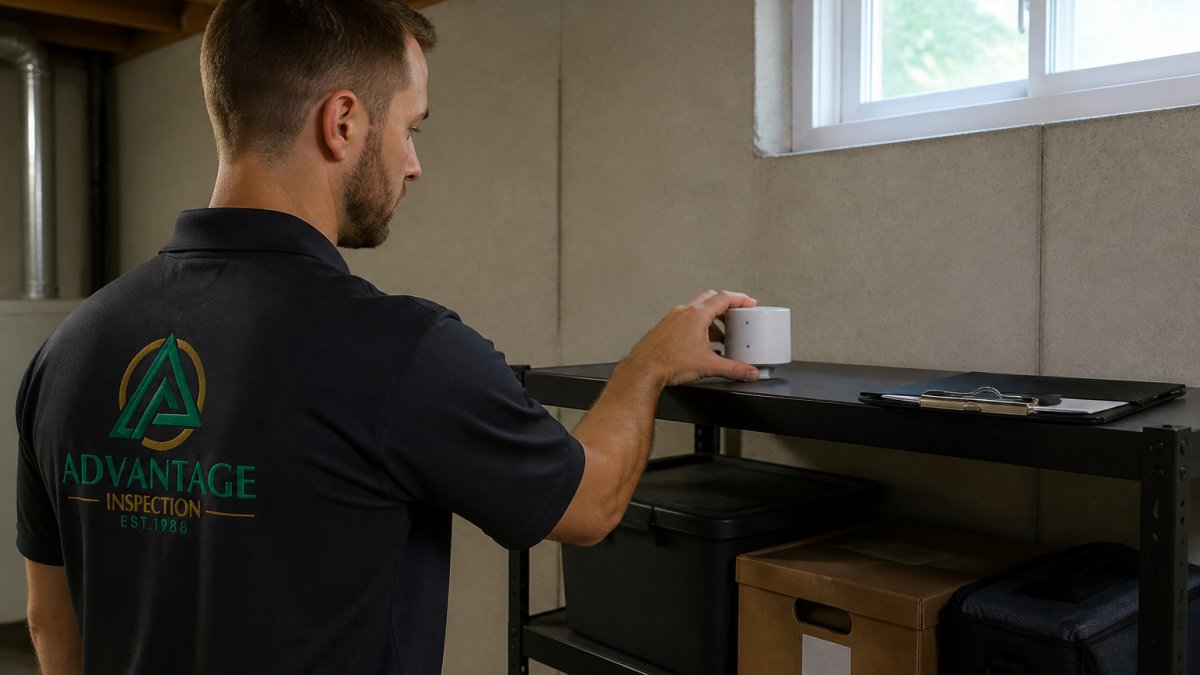
Placement follows standard rules: the device sits at least 20 inches above the floor, away from exterior walls, drafts, and heat sources, and doors and windows stay closed except for normal entry and exit.
Here is how a typical visit runs:
- The technician confirms closed-house conditions and notes the home’s layout.
- The monitor is placed in the lowest livable level, often a basement or first floor.
- The device runs for the full test window with no disturbance.
- The technician retrieves the monitor and documents the placement.
- You receive a report with the radon concentration and a clear recommendation.
How Long Does Radon Testing Take?
Short-term radon testing takes two to seven days, while a long-term test runs 90 days or more.
A short-term test fits a real estate transaction, where a buyer needs an answer before a contingency deadline.
| Test Type | Duration | Best For | Trade-off |
|---|---|---|---|
| Short-term | 2-7 days | Real estate deadlines | Snapshot only |
| Long-term | 90+ days | Year-round accuracy | Slow result |
If you are buying or selling, a short-term test is usually the practical choice. If you already own the home and want a true annual average, a long-term test tells a fuller story.
Radon Monitor vs Test Kit: Which Method Fits Your Timeline
A continuous radon monitor gives an electronic reading over hours or days, while a passive test kit relies on a detector mailed to a lab.
Passive test kit: A charcoal or alpha track detector that absorbs radon over the test window, mailed to a lab with results in days to weeks.
The trade-off is speed versus cost: a monitor costs more upfront but delivers faster, richer data, while a kit costs less but adds mailing and lab time.
Professional Radon Testing vs DIY: Where the Money Goes
Professional radon testing vs DIY comes down to control, documentation, and liability. A DIY kit is a valid screening tool, but a professional test gives you a calibrated device, verified placement, and a report that holds up in a transaction.
DIY kits work well for a first look: follow the instructions, keep the house closed, and mail the detector.
A certified measurement professional brings:
- A calibrated device with a traceable record
- Correct placement and closed-house verification
- A written report tied to a specific date and location
The money in a professional test buys reliability and paperwork, not just a number. In a purchase or sale, that paperwork is often the whole point.
If you test with a kit and get a result near the action level, treat it as a signal, not a verdict. A follow-up test with a calibrated monitor confirms whether the reading is real before you spend on mitigation.
How to Compare Quotes and Verify a Certified Measurement Professional
Comparing quotes starts with matching scope, not price. Two providers can quote different totals for what sounds like the same test and still be selling different services, so get each provider to break the fee into its parts before you compare numbers.
What a Standard Test Fee Should Include
A complete residential radon measurement fee typically covers:
- One or more calibrated measurement devices placed in the lowest livable level
- Technician time to deploy and retrieve the device
- Closed-house verification at placement and pickup
Charges that are often billed separately, and that you should ask about up front, include:
- Travel or trip fees outside a provider’s normal service radius
- Additional devices for a second foundation zone, a crawl space, or a finished basement
- Rush or same-day results for a tight real estate deadline
A quote that looks low may simply exclude travel, lab fees, or a second device. Ask for the total in writing, itemized, before you book.
Verify Certification and Calibration
Radon measurement is regulated at the state level, and requirements vary: some states license professionals, others require certification through a recognized national program, and some have no state requirement. Confirm which applies where you live before you hire.
A qualified measurement professional generally holds one of these credentials:
- NRPP (National Radon Proficiency Program) certification, administered through AARST
- NRSB (National Radon Safety Board) certification
- A state radon license where one is issued
Certification is not the same as calibration. Ask for the calibration record for the specific device that will be placed in your home; continuous monitors are calibrated on a schedule, and the record should show the calibration date and reference source.
Questions to Ask Before You Book
Use this list when you request quotes:
- Which device will be used, a continuous monitor or a passive detector?
- How long will the test run, and does that fit my deadline?
- How many devices, and where will they be placed?
Ask for the sample report first. A provider who documents placement, device serial numbers, test dates, and closed-house conditions in the report is usually the one who also documents them on site.
How to Spot a Misleading Low Price
A low quote is not automatically bad, but certain patterns signal a smaller service:
- A single device in a home with two foundation zones. Radon can enter through a basement slab and a crawl space independently, and one device may miss the higher zone.
- A shortened test window. A test that runs less than the standard short-term duration may not capture a stable reading.
- No written report. A verbal result cannot be handed to a lender, attorney, or buyer.
When two quotes differ, ask what the lower one leaves out. The answer usually explains the gap.
Find your state’s radon program and licensing requirements
Reading Your Results and Deciding What Comes Next
Your report states the radon concentration in picocuries per liter (pCi/L). The EPA action level is 4 pCi/L, the point at which the agency recommends mitigation (the EPA). Results below that level are not a guarantee of zero risk, since no level of radon exposure is considered completely safe.
What the Number Actually Means
A short-term test is a screening measurement, what radon looked like during a specific window under closed-house conditions. Because radon levels shift with weather, season, soil moisture, and ventilation, a single short-term result is a snapshot, not a year-round average.
A long-term test, run 90 days or more, produces a result closer to your true annual average, the same home can read 3.1 pCi/L in a short-term winter test and 2.4 pCi/L on a long-term test across a full year.
Confirmatory Testing: When One Result Is Not Enough
A confirmatory test is a second measurement used to verify a first result before you commit to mitigation, most useful when:
- A short-term result lands between 2 and 4 pCi/L, near the action level
- A short-term result is at or above 4 pCi/L and you want to confirm before pricing a system
- The first test had any question about closed-house conditions
A common pattern is to follow a short-term screening with either a second short-term test under the same conditions or a long-term test if your timeline allows. Two short-term results can be averaged; a long-term result stands on its own.
Deciding Between Retest and Mitigation
| Result | Typical Next Step |
|---|---|
| At or above 4 pCi/L | Plan for mitigation; a confirmatory test is optional but common before signing a contract |
| Between 2 and 4 pCi/L | Confirm with a follow-up test; weigh mitigation against your comfort level |
| Below 2 pCi/L | Retest periodically, especially after renovations or foundation changes |
Mitigation is a larger expense than testing, so confirming a borderline result first is usually cheaper. A mitigation system vents soil gas from beneath the home and away from the living space, typically installed by a separate contractor from the one who tested.
If You Are Buying or Selling
The report becomes part of the transaction record. Keep a copy with your due diligence documents, and check whether your purchase agreement sets a specific radon contingency deadline. A short-term test usually fits that window, but the result is a screening number, if it lands near the action level, buyer and seller may need to negotiate a confirmatory test or a mitigation credit rather than a full system. If the transaction also calls for a broader look at the property, a Home Inspection can cover the rest of the major systems in the same window.
If You Already Own the Home
You have more time, so choose accuracy over speed. A long-term test gives the year-round picture and is the better basis for deciding whether to install a system. If a short-term result was low, retest every few years or after any major renovation that changes how the home is sealed or ventilated.
Treat the first short-term result as a signal, not a verdict. Confirm anything near 4 pCi/L before you spend on mitigation, and keep the written report, it is the document that carries weight in a transaction and in any future decision about the home.
Our team at Advantage NC delivers detailed reports built for exactly that purpose, and our 30-day protection program backs the work after closing.
Frequently Asked Questions
How much does professional radon testing cost?
Professional radon testing service cost depends on the testing method, home size, foundation type, and whether the test is bundled with a home inspection. Short-term continuous monitor tests usually sit at the lower end, while long-term alpha track detectors and multi-unit or commercial properties cost more. Travel fees, laboratory analysis, and rush reporting can add to the total. Because pricing varies by provider and property, request an itemized quote rather than relying on a single advertised number.
Is professional radon testing more accurate than a DIY test kit?
Professional radon testing uses calibrated continuous monitors or laboratory-analyzed detectors placed by a certified measurement professional who controls closed-house conditions and device placement. DIY test kits can work when instructions are followed exactly, but errors in placement, timing, or window opening skew results. If you are buying or selling a home and need defensible numbers for a real estate transaction, a professional test gives you documented chain of custody and a report you can act on.
How long does professional radon testing take?
A short-term test runs 2 to 7 days, with 48 hours as the most common window for real estate transactions. Long-term tests run 90 days or more and give a better picture of year-round exposure. During the test, windows and doors stay closed except for normal entry and exit, which is called closed-house conditions. Your provider will tell you exactly when the device goes down and when it gets retrieved.
What is included in a professional radon test?
A professional radon test typically includes device placement by a certified measurement professional, closed-house verification, the testing period itself, device retrieval, laboratory analysis or monitor data download, and a written report showing radon concentration in picocuries per liter (pCi/L). Many providers also include a comparison to the EPA action level of 4 pCi/L and a recommendation on whether to retest or move to mitigation. Ask whether the quote covers travel, lab fees, and a follow-up test if results are borderline.
Radon testing is one of the smallest line items in a real estate transaction, yet it can change what you negotiate and how you live in a home. Advantage NC has completed more than 500,000 inspections since 1988, with a 4.9-star rating across over 1,900 reviews, and our radon testing pairs calibrated measurement with a report you can actually use during due diligence. Schedule your radon test with Advantage NC and get clear results, a documented report, and a recommendation you can act on.

Recent Comments